Zealandia (Te Māra a Tāne) Sanctuary is a world-renowned urban wildlife sanctuary and conservation project located in the suburb of Karori, Wellington, New Zealand. It’s celebrated as one of the most successful examples of ecological restoration anywhere in the world — especially remarkable because it sits right on the edge of a major city.
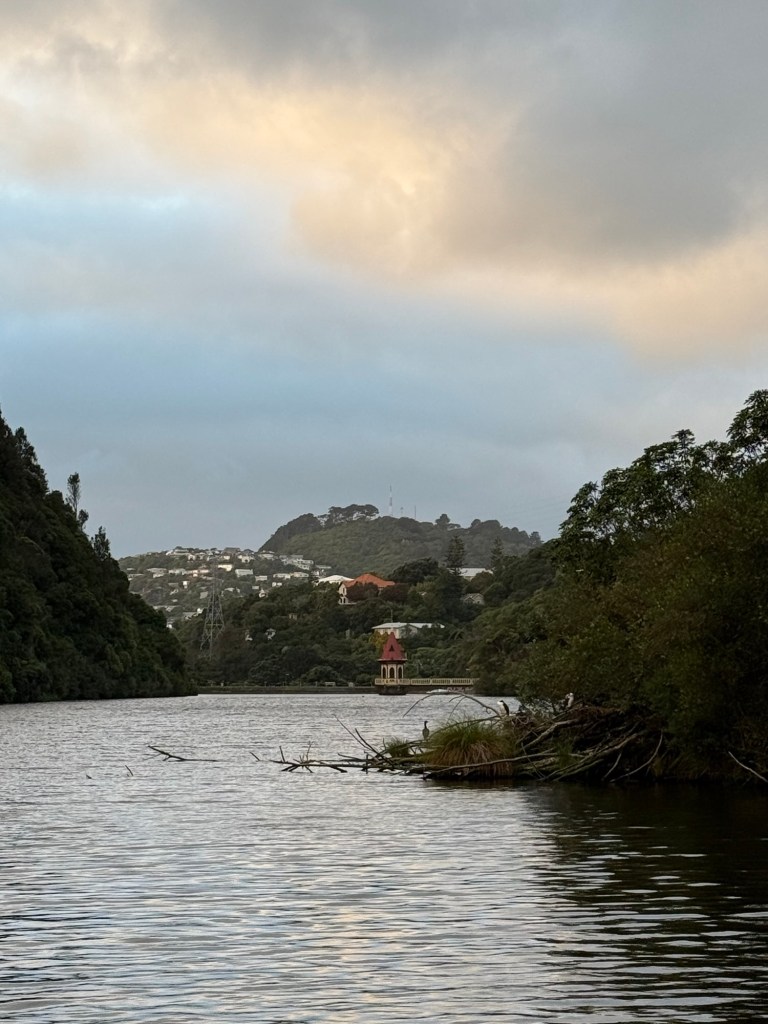
It was at the very top of our must-visit list when we came through Wellington, and together with our visit to Wētā Workshop, it made for a thrilling end to a great day exploring everything the city has to offer.
🐦 What Zealandia Is
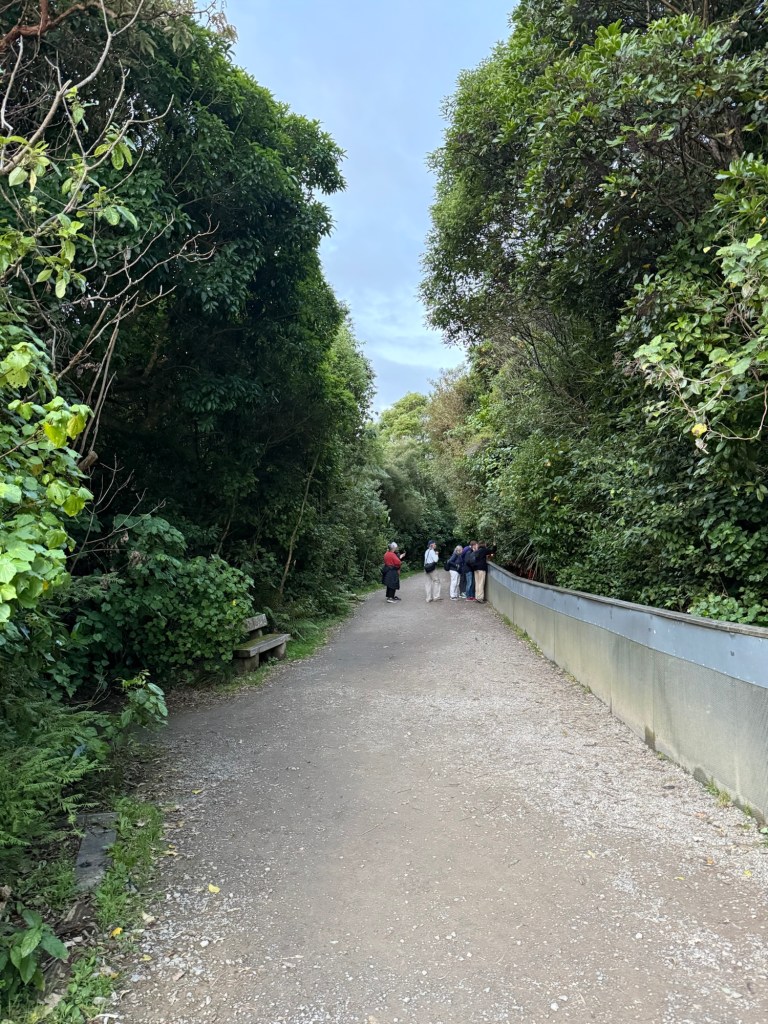
Zealandia is a 225-hectare protected ecosanctuary surrounded by an 8.6 km predator-exclusion fence that keeps out introduced mammals such as rats, stoats, possums, and cats. This creates a “mainland island” where native species can thrive as they once did before human settlement.
🌲 Conservation and Restoration
The sanctuary has an ambitious long-term vision (a 500-year plan) to restore the valley’s ecosystems as closely as possible to their pre-human state, including forest, freshwater, and wildlife communities.
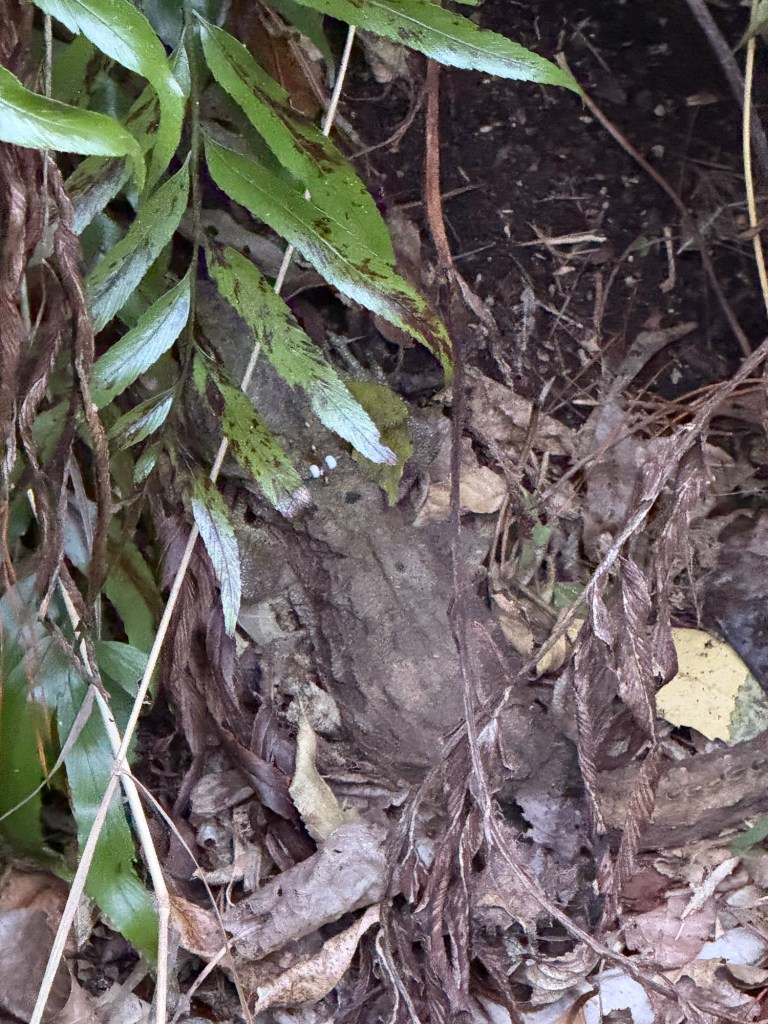
After the predator fence was completed in 1999 and pests were eradicated, the area became one of the first large mainland sites to be truly predator-free in an urban environment.
We had pre-booked a dusk tour and learned the hard way that booking early is essential. Unfortunately for us, the most popular night tours were already fully booked.
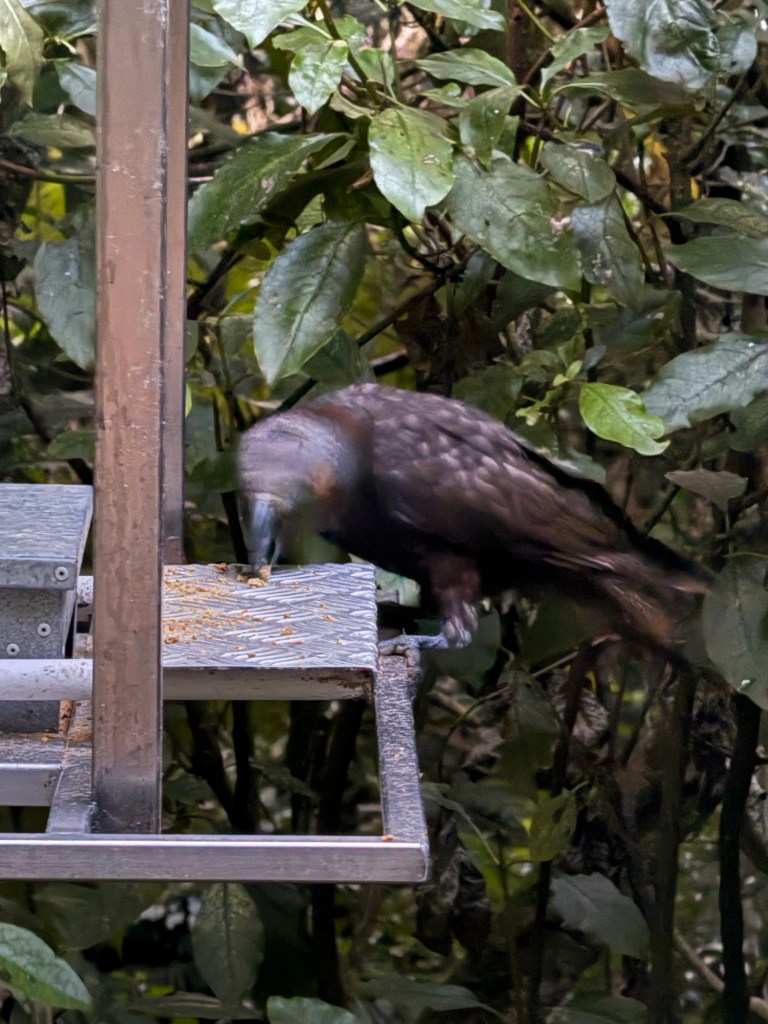
Zealandia has reintroduced more than 20 native species — many absent from mainland New Zealand for over a century — including little spotted kiwi, kākā (forest parrots), tīeke (saddleback), and bellbirds.
The sanctuary itself is an incredibly cool place. After checking in and collecting our audio devices and torches fitted with red filters (no white light is allowed in the park, as it disturbs nocturnal animals), we set off on what turned into an epic adventure.

We had both a guide and a spotter, and even though we arrived at dusk — not the best time to see nocturnal wildlife, which usually emerges after full darkness — we still saw an amazing amount of wildlife. Photos were nearly impossible to take, but we spotted weird and wonderful cave wētā, the incredibly rare Hamilton’s frog (pepeketua), lots of kākā, glowworms, and coolest of all, a spotted kiwi that nearly ran over my legs. Luckily, we managed to get a great video of this rare encounter.
Seeing a kiwi was high on our list of must-see experiences in New Zealand — and we actually saw one!
🌿 Wildlife and Habitat
Today, the sanctuary is home to dozens of native birds, reptiles, insects, fish, and plants, including ancient reptiles like the tuatara, rare native frogs, and giant wētā.
📚 Cultural and Community Importance
Zealandia works closely with local Māori (mana whenua) and community groups to incorporate traditional knowledge (mātauranga Māori) and support broader regional biodiversity efforts beyond the sanctuary fence, such as the Sanctuary to Sea Kaiwharawhara project.
🦜 Impact Beyond the Sanctuary
Zealandia has had a city-wide impact on Wellington’s biodiversity. Native birds like tūī and kererū are now common in suburban gardens, thanks in part to increased predator control and habitat restoration inspired by Zealandia’s success.
Final Thoughts
In summary, Zealandia is an extraordinary conservation achievement: a predator-free sanctuary in the heart of an urban area where native wildlife has rebounded spectacularly. It is an absolute must-visit when in Wellington, and it gave us memories that will last a lifetime. The passionate people at Zealandia, combined with New Zealand’s weird and wonderful animals and critters, make this a top-notch destination for adventurers of all ages.




 Wremer Travels (yes, we do!)
3 comments ›