Sometimes we need to explore our surroundings. It is easy to write about Grand Canyons, Italian villages and roadtrips on endless plains in the wild west but maybe it is harder to be a proper local writer?
How about my local surroundings, what do they have to offer? Quite a lot but it seems harder to write about the near than about the far. So we decided to do something about this, and visit a site we can see from our own livingroom: the Landehobde coastal fort from WW2.

During the occupation of Norway, the nazi forces bulit coastal forts all along the coast of Norway as a part of the Atlantic Wall stretching from the Spanish-French border to northern Norway. Next to our house we have a anti-aircraft gun position from WW2 and all around our property there are metal loops in the rock to hook camouflage nets. Mandal was an important strategic town on the tip of southern Norway and all around there are bunkers, gun positions, remnants of Mandal airfield, trenches in the rocks and other traces from the occupation that lasted from 9th of April 1940 to 9th May 1945.

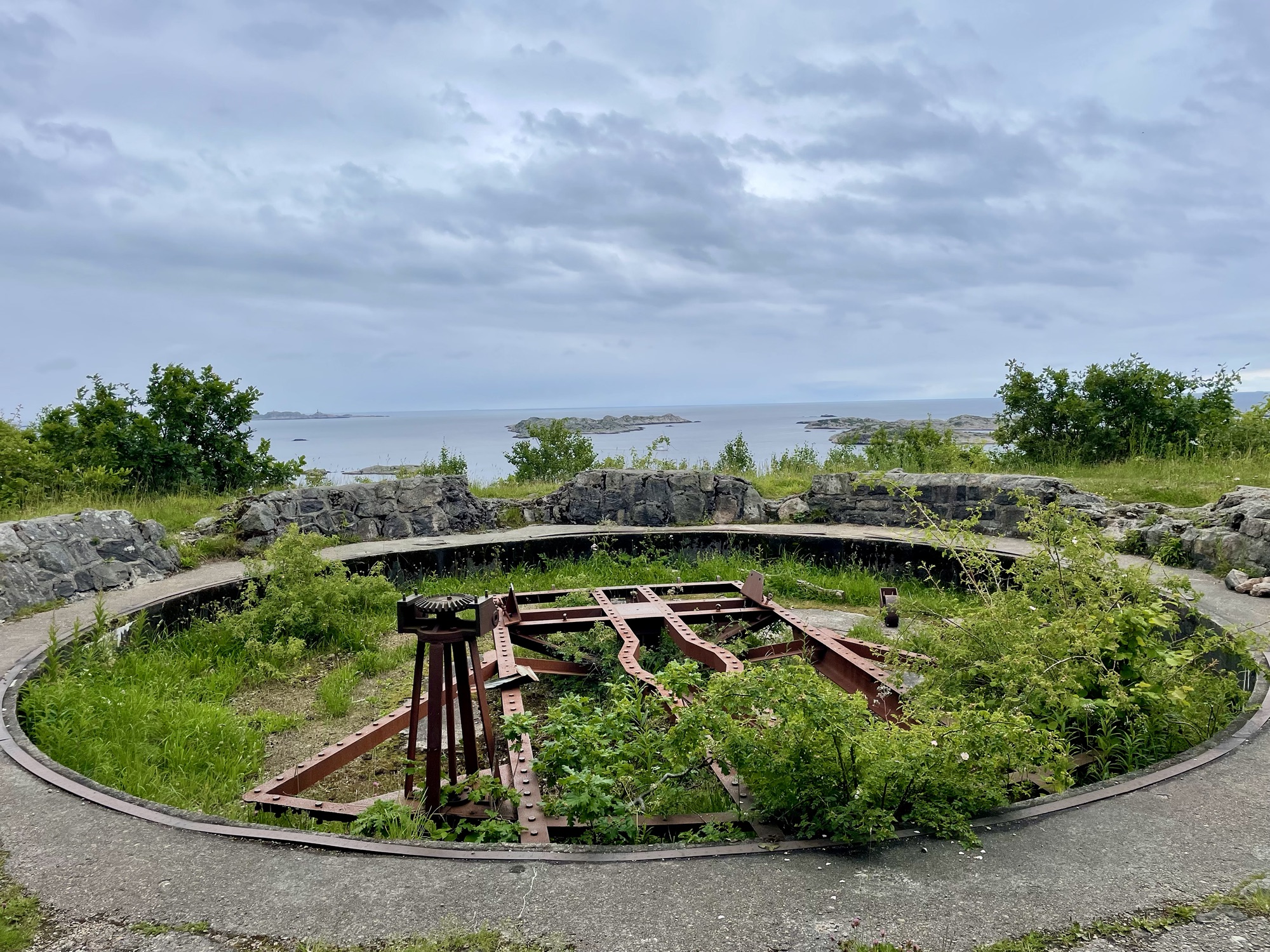

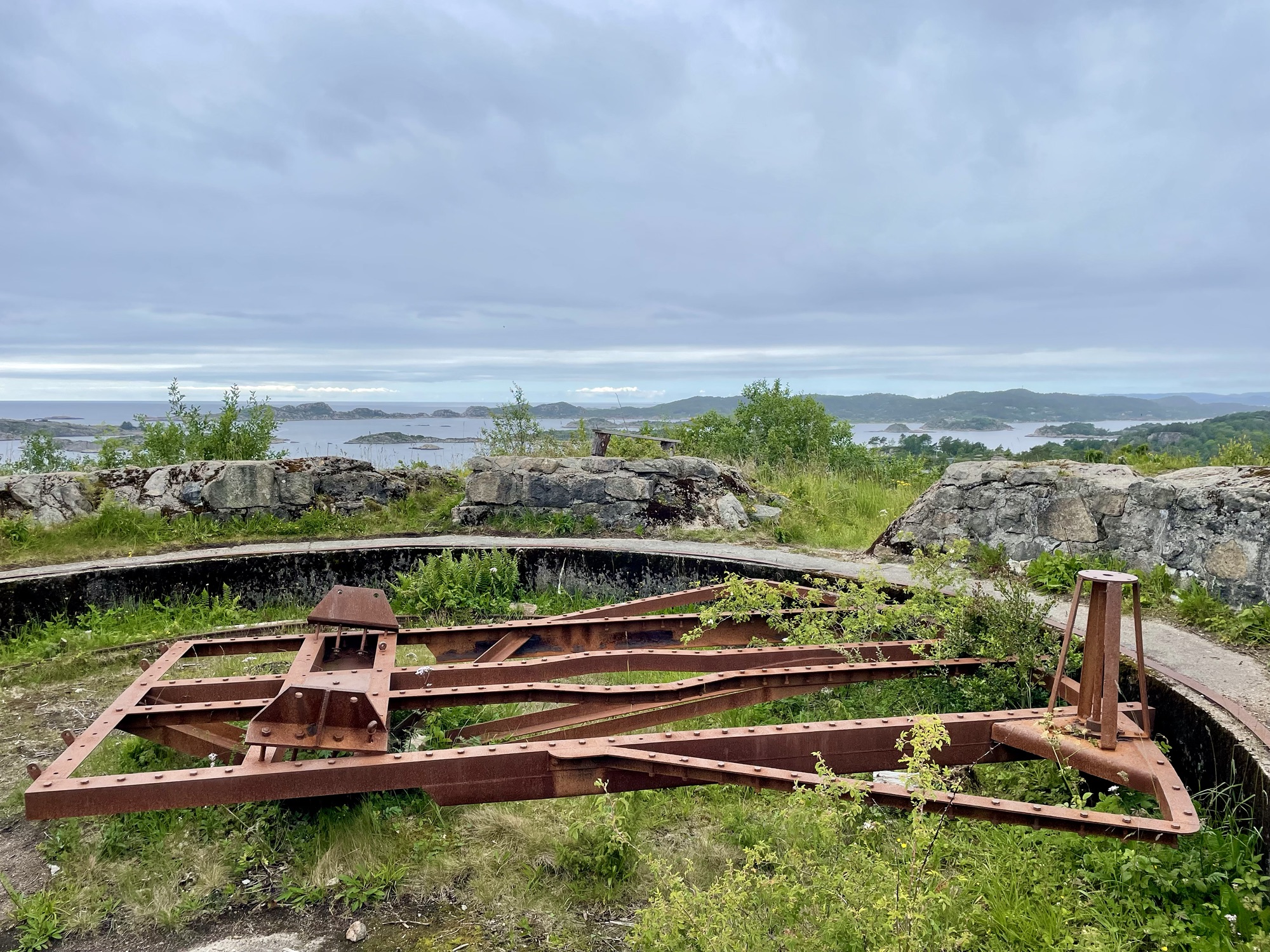


Landehobde coastal fort is situated just outside Mandal city centre to the west, there is a narrow road that leads to a public parking spot, and the trail leads through the bushes to a steep incline that you have to climb. Here is a useful link to UT.no with map. There was a bridge here, you can see the remnants of it by the carpark. There are no markings, no signs or anything else that will show you the way to the different bunkers and gun placements, you just need to explore the main path and the many smaller paths that leads to different parts and buildings of the fort.


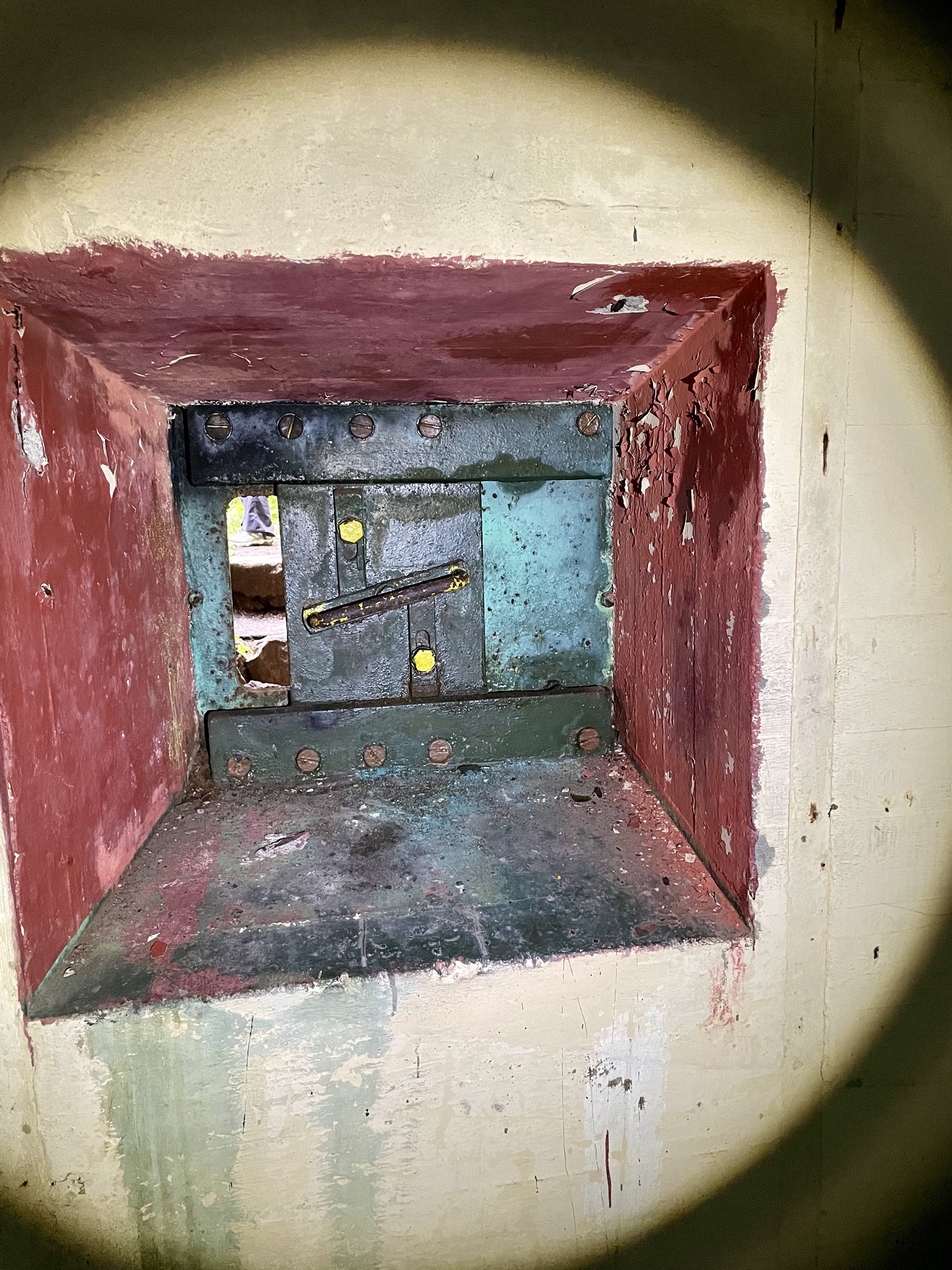


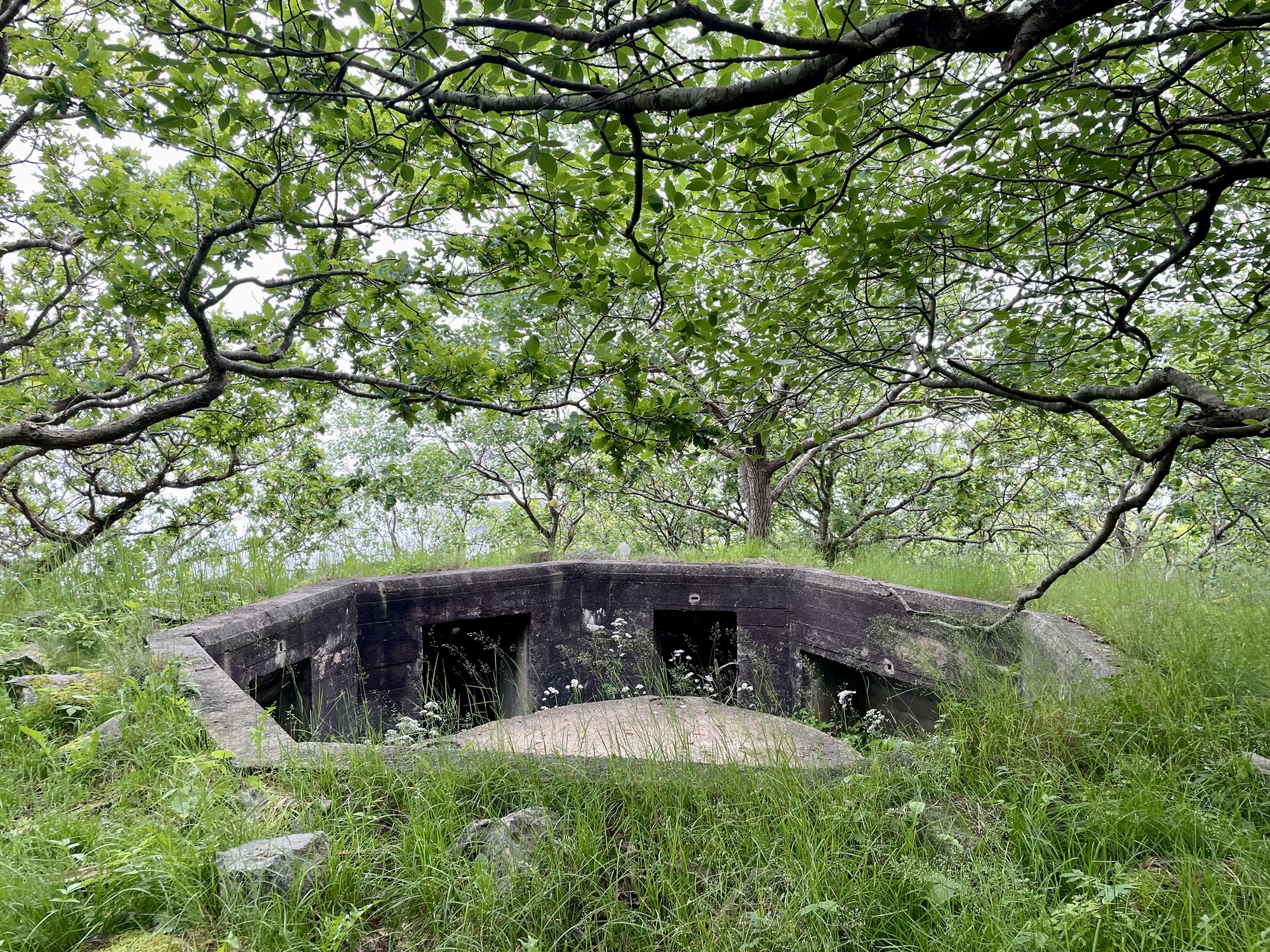
The fort itself was constructed during the war, and was still under development when the war ended. The fort had 4 cannons of 10,5 centimentres that could fire 12 000 metres. All where supposed to be built in casemates eventuallt but only one was completed leaving 3 of them in open gun placements.


There were between 100-200 soldiers in the camp and there was a POW camp with around 40 Polish and Russian prisoners of war who were forced to help build the fort.
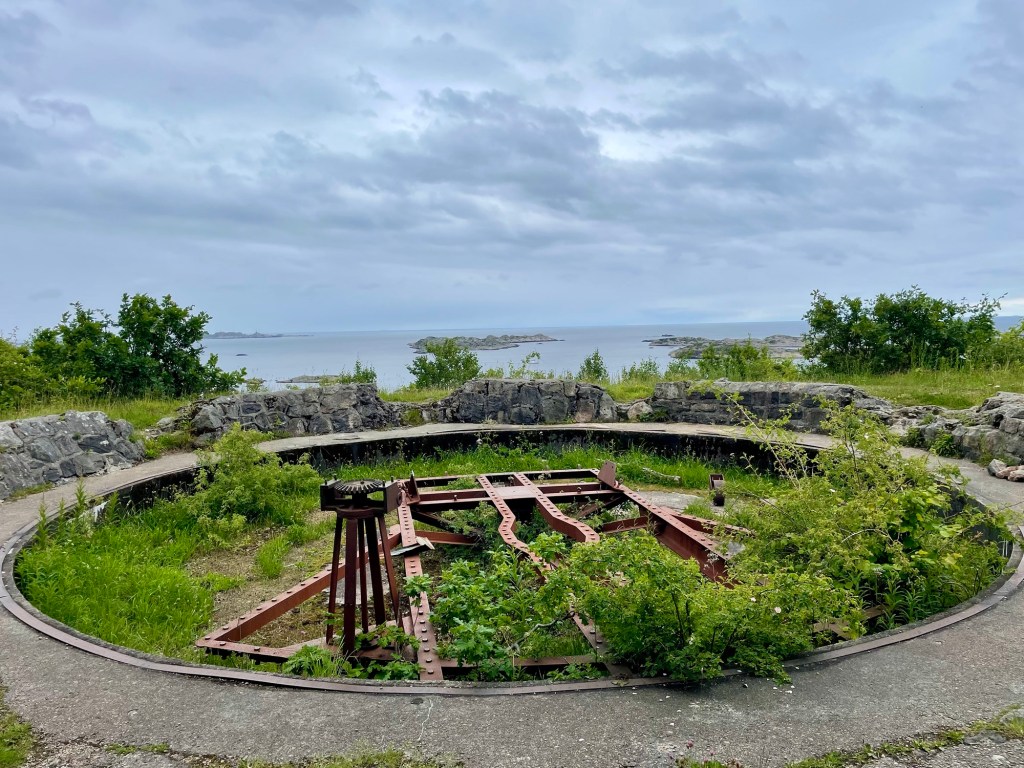
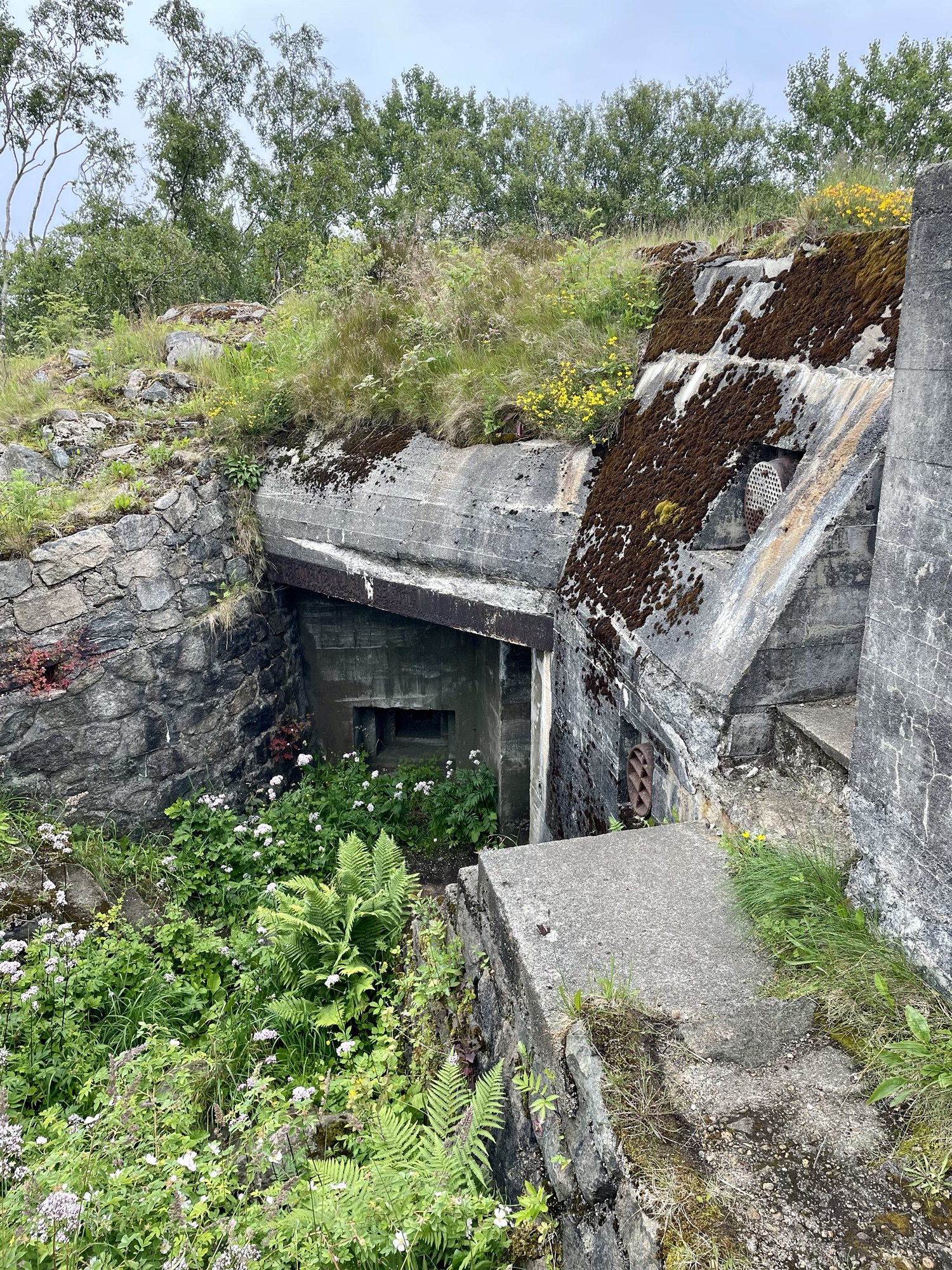
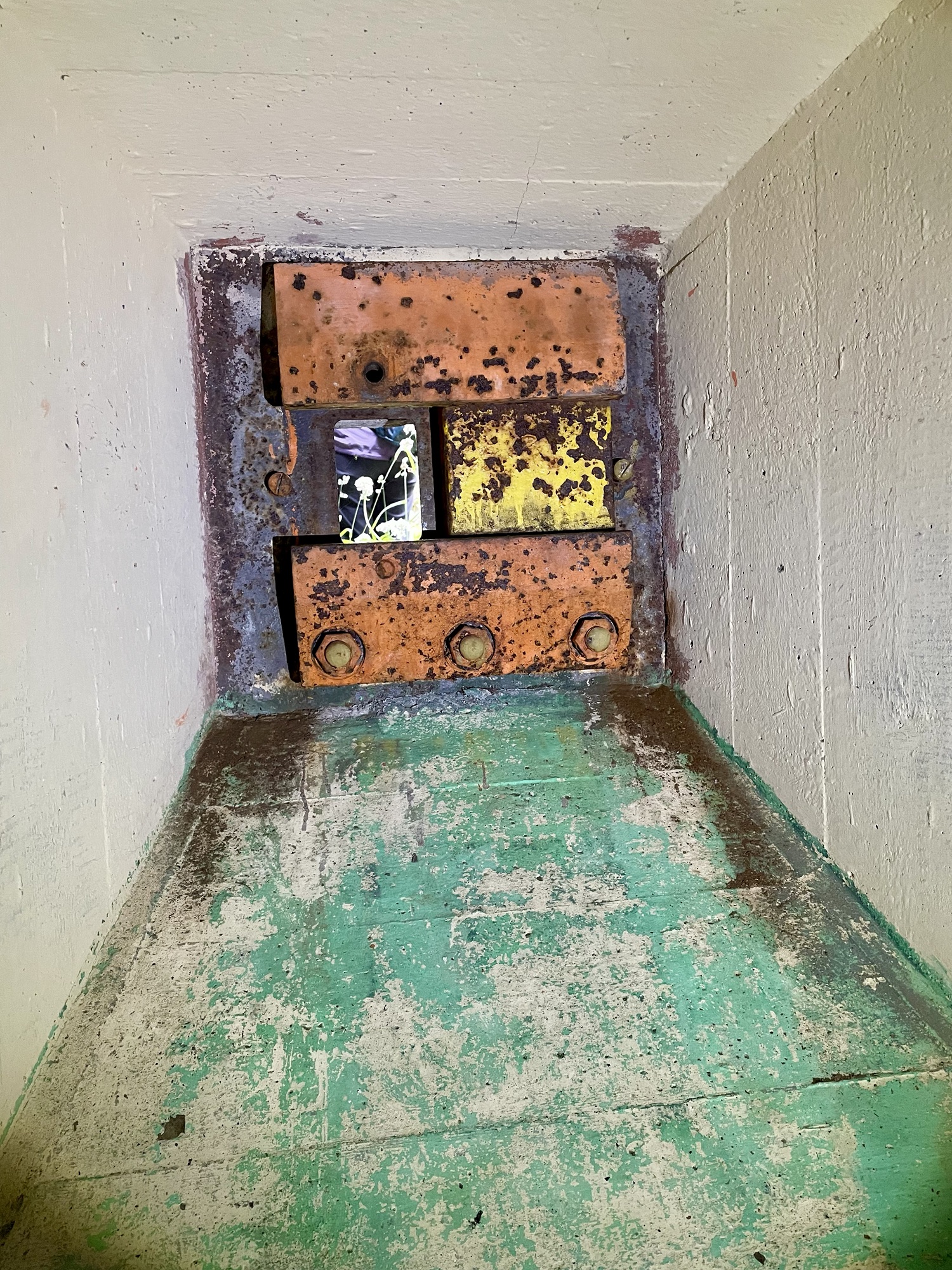
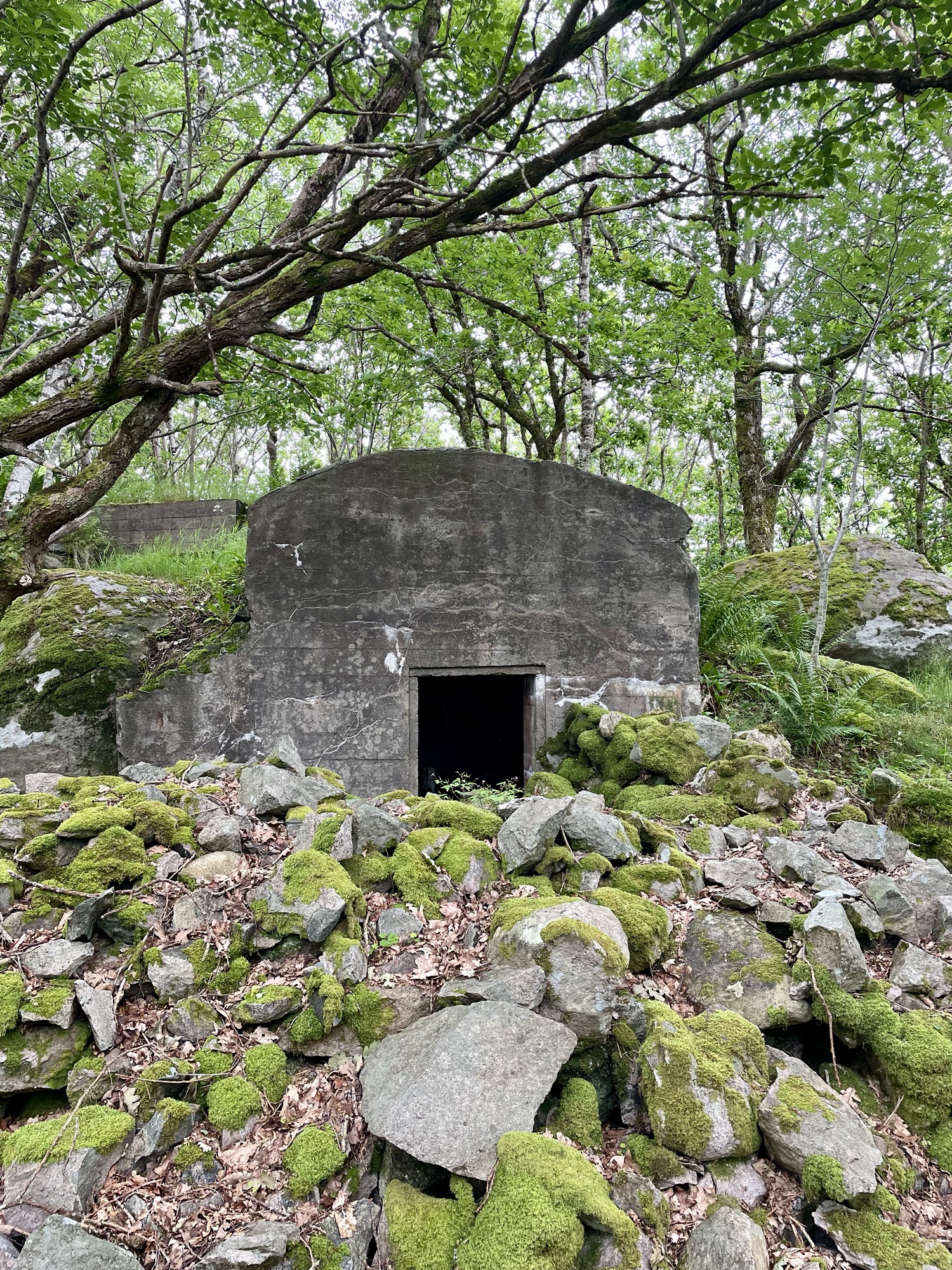
In addition to the 3 open gun placements and 1 casemate there are around 10 bunkers, consiting of hospital, command and personell bunkers. In addition to this there are barracks and houses used by officers, now only the foundation walls remain.
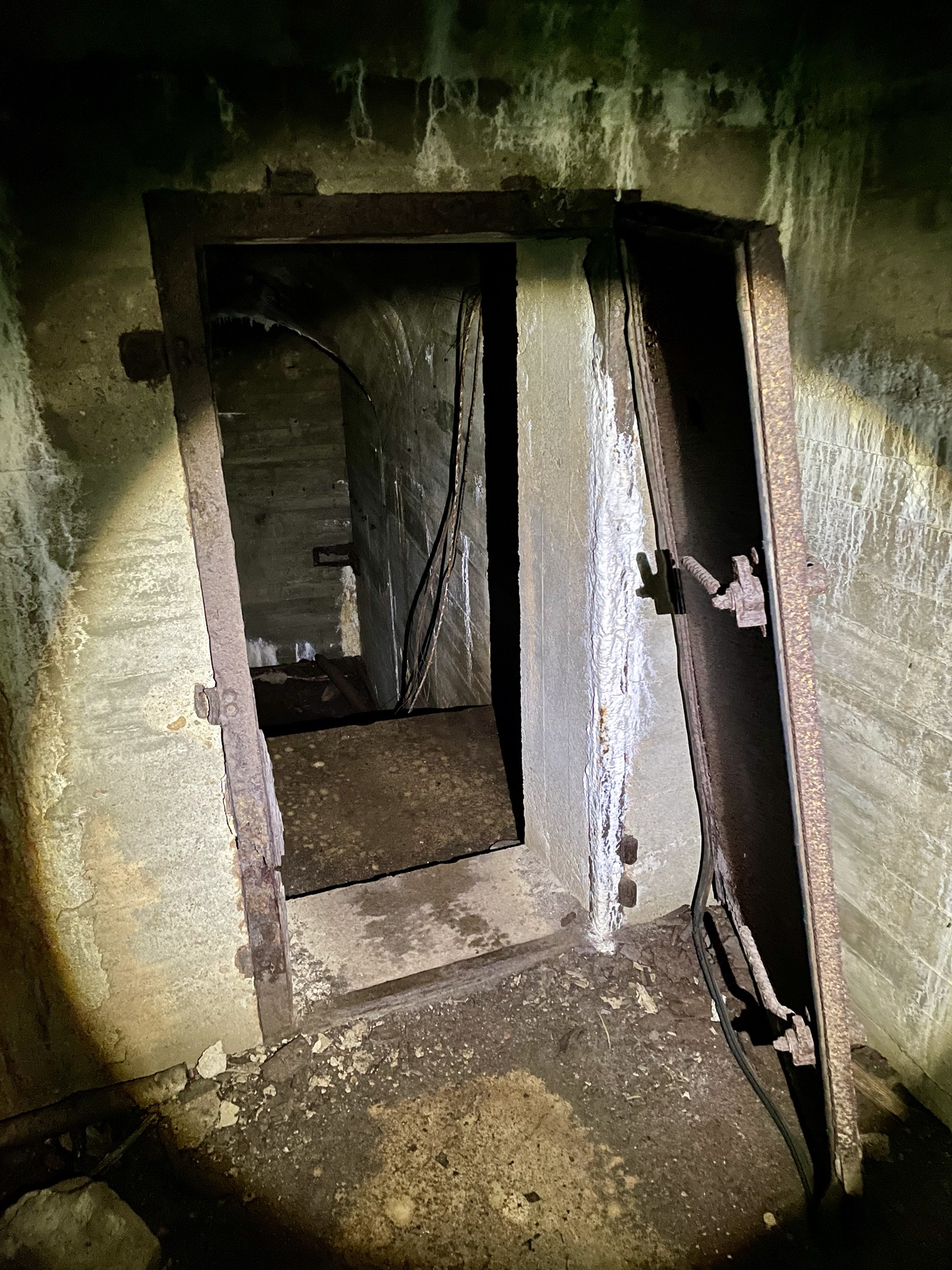

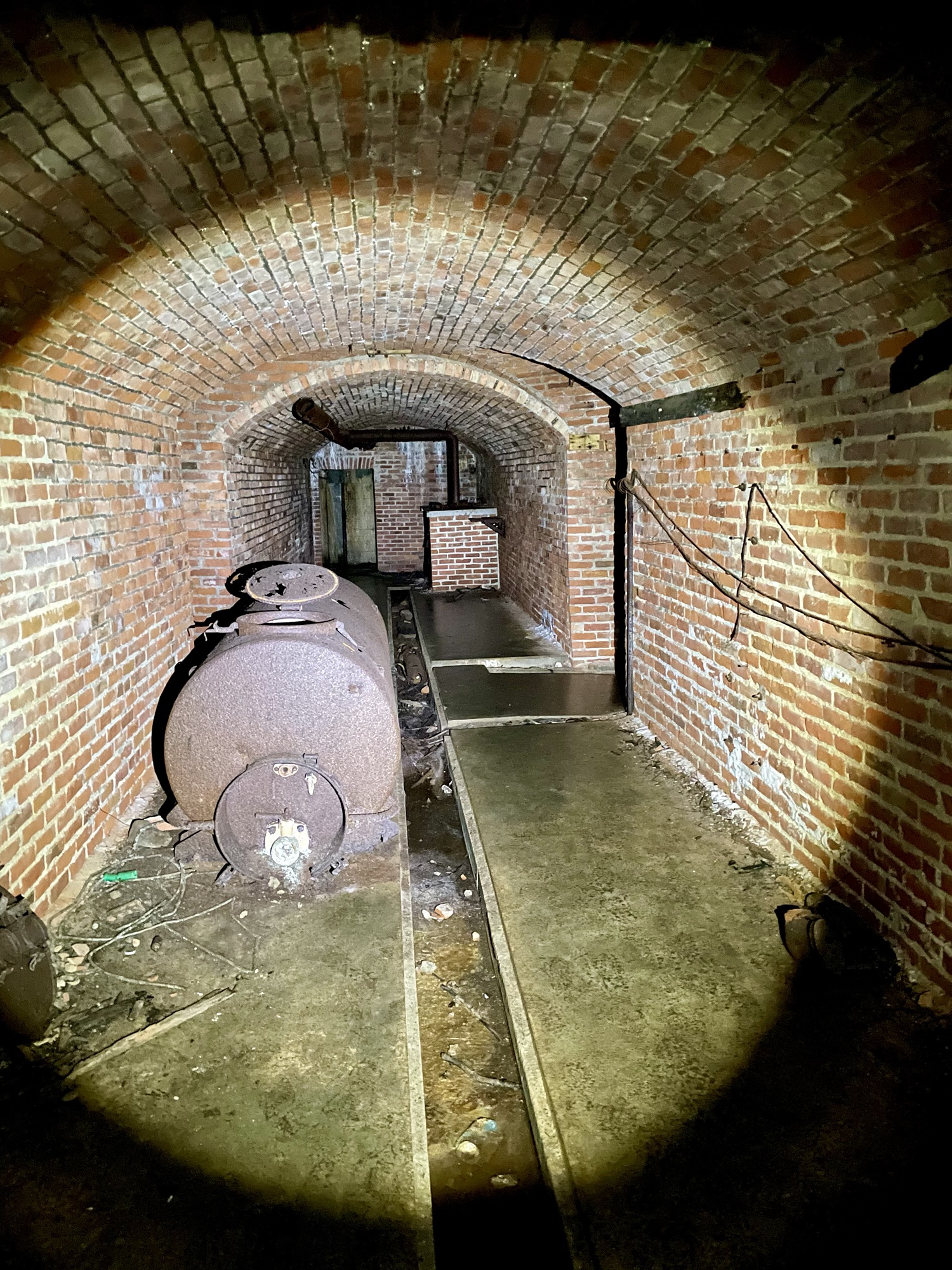
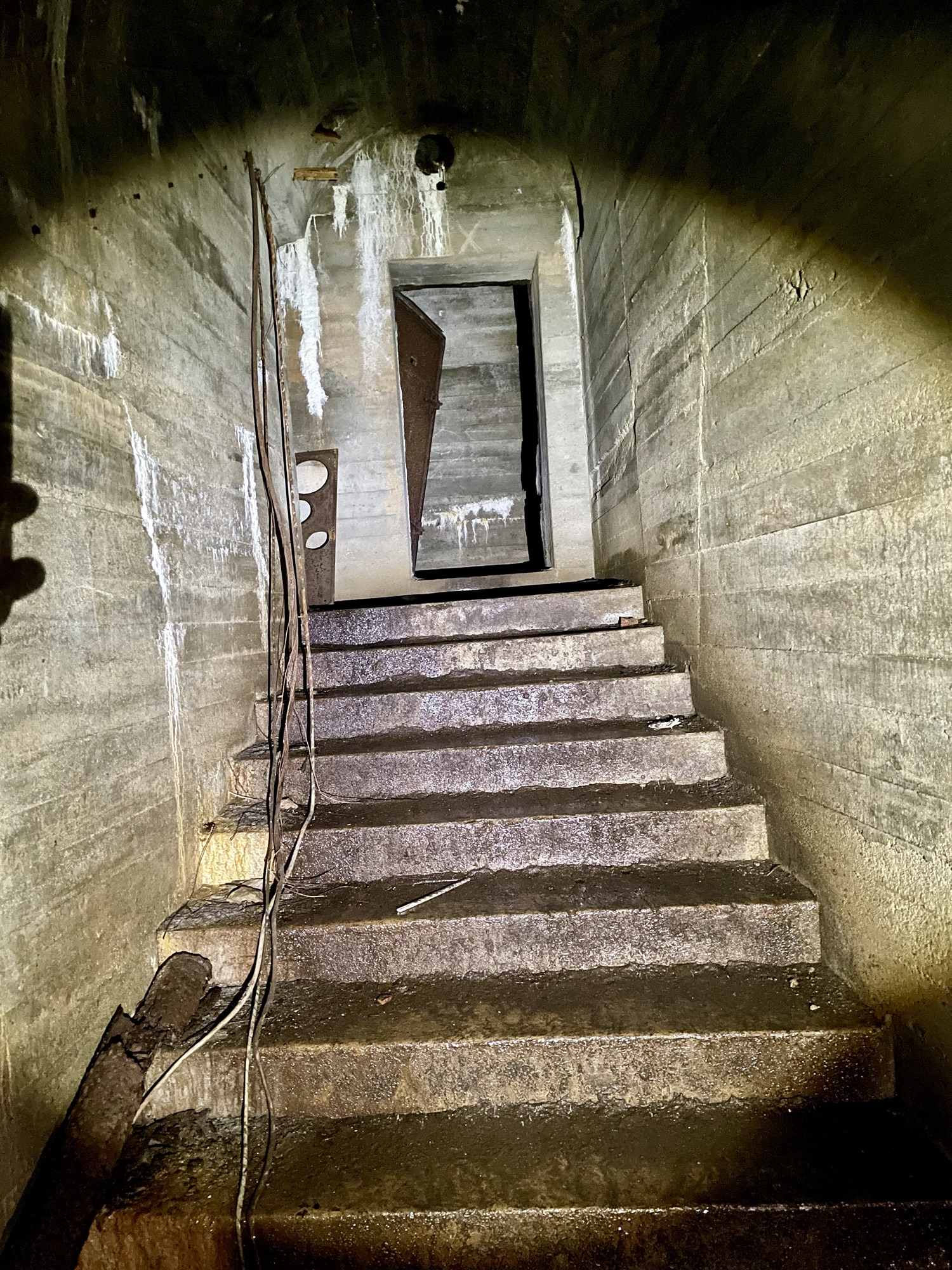
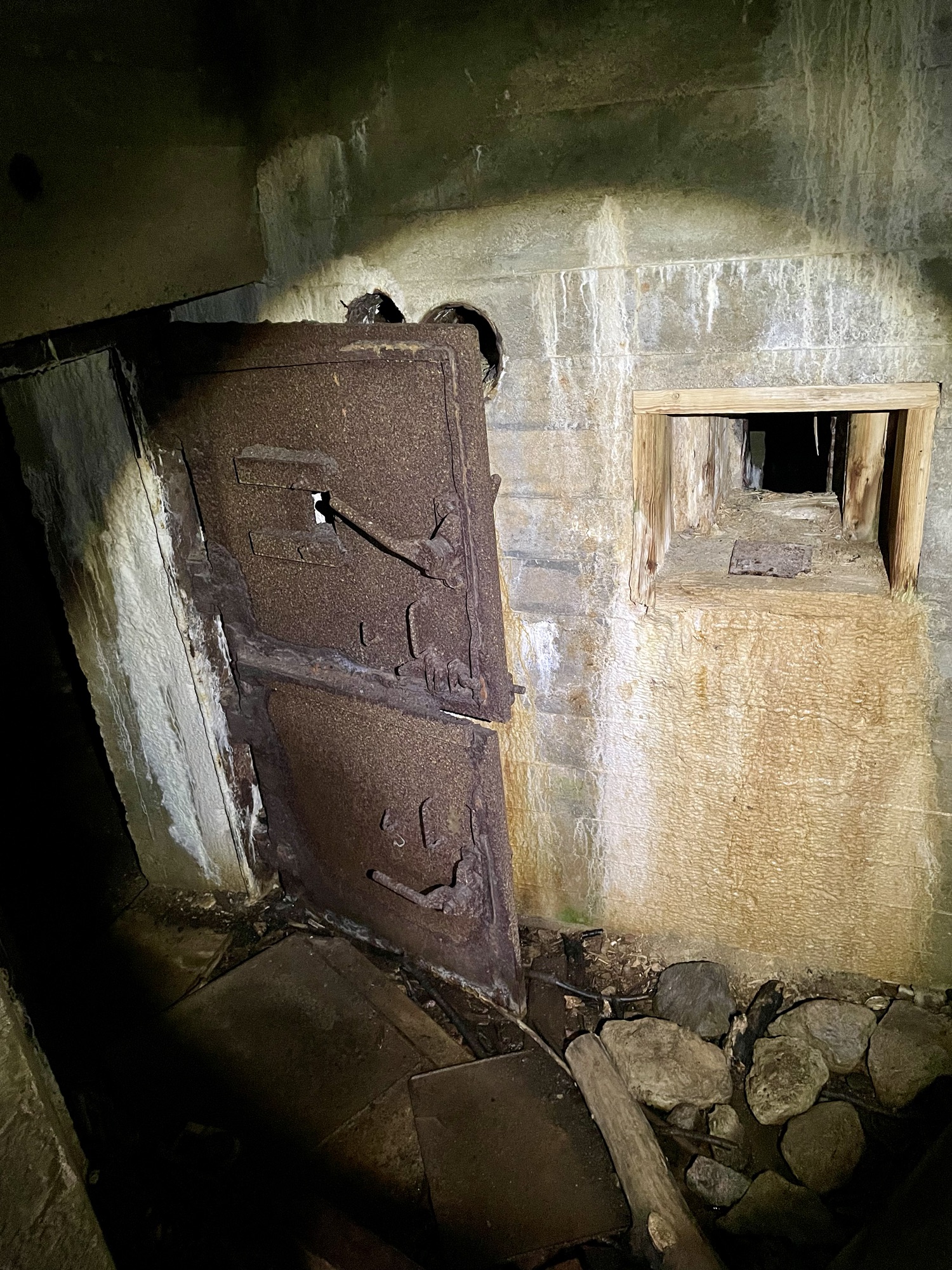
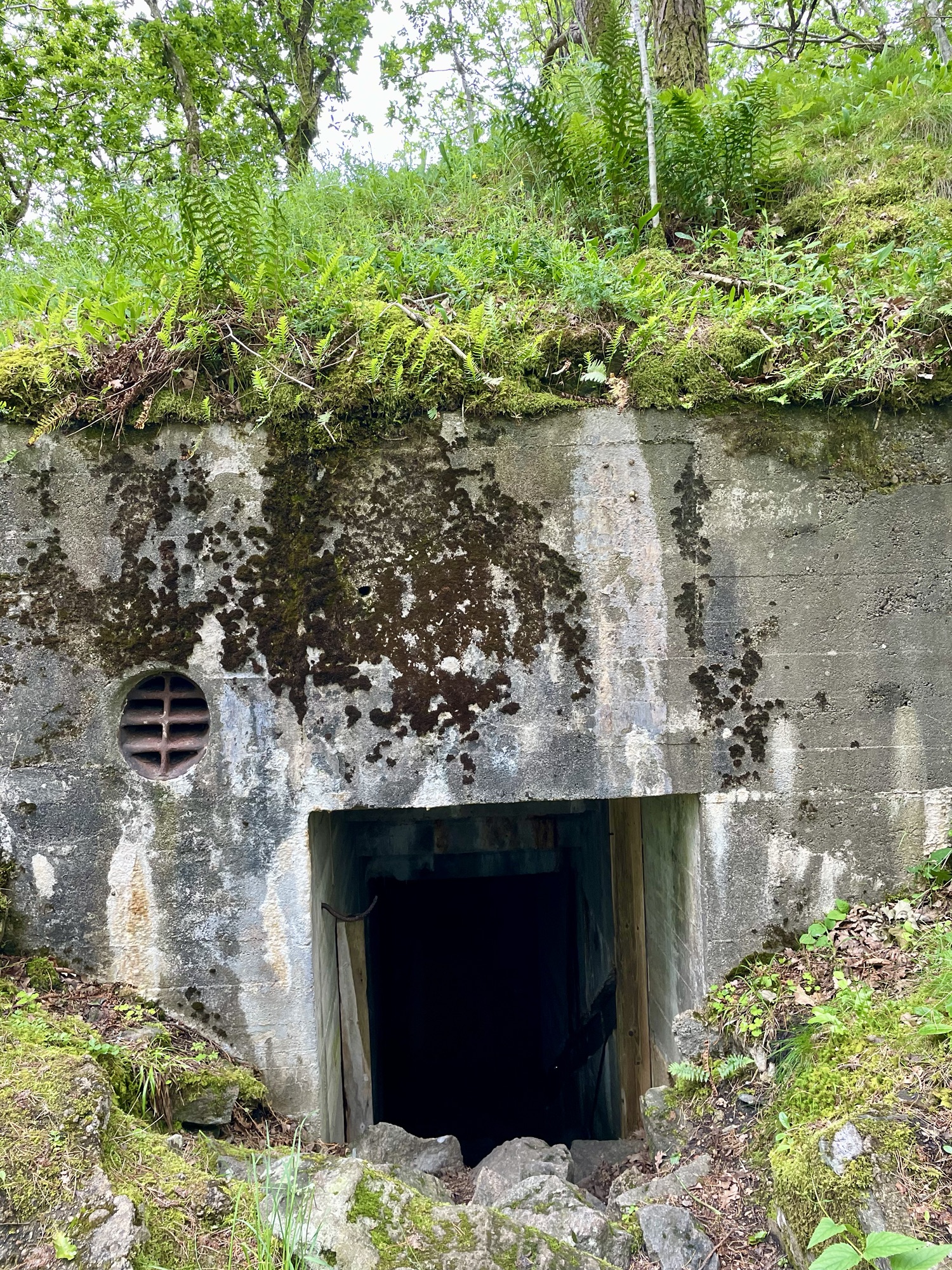
After the war it was in operation until 1948 and subsequently abandoned, entrances to bunkers filled in with rocks and the area has slowly been reclaimed by nature.


It is a facinating walk in pristine oak woods with ruins of houses and re-opened bunker openings, the partial re-opening of the bunkers started in the 70s. You are of course here on your own risk, be sensible and careful but if you bring a torch the adventure is spectacular. Dotted around the site are gun positions, the amazing hospital bunker that looks like a wine cellar. The command bunker still has colours left on the walls and the personell bunkers have their names above them.
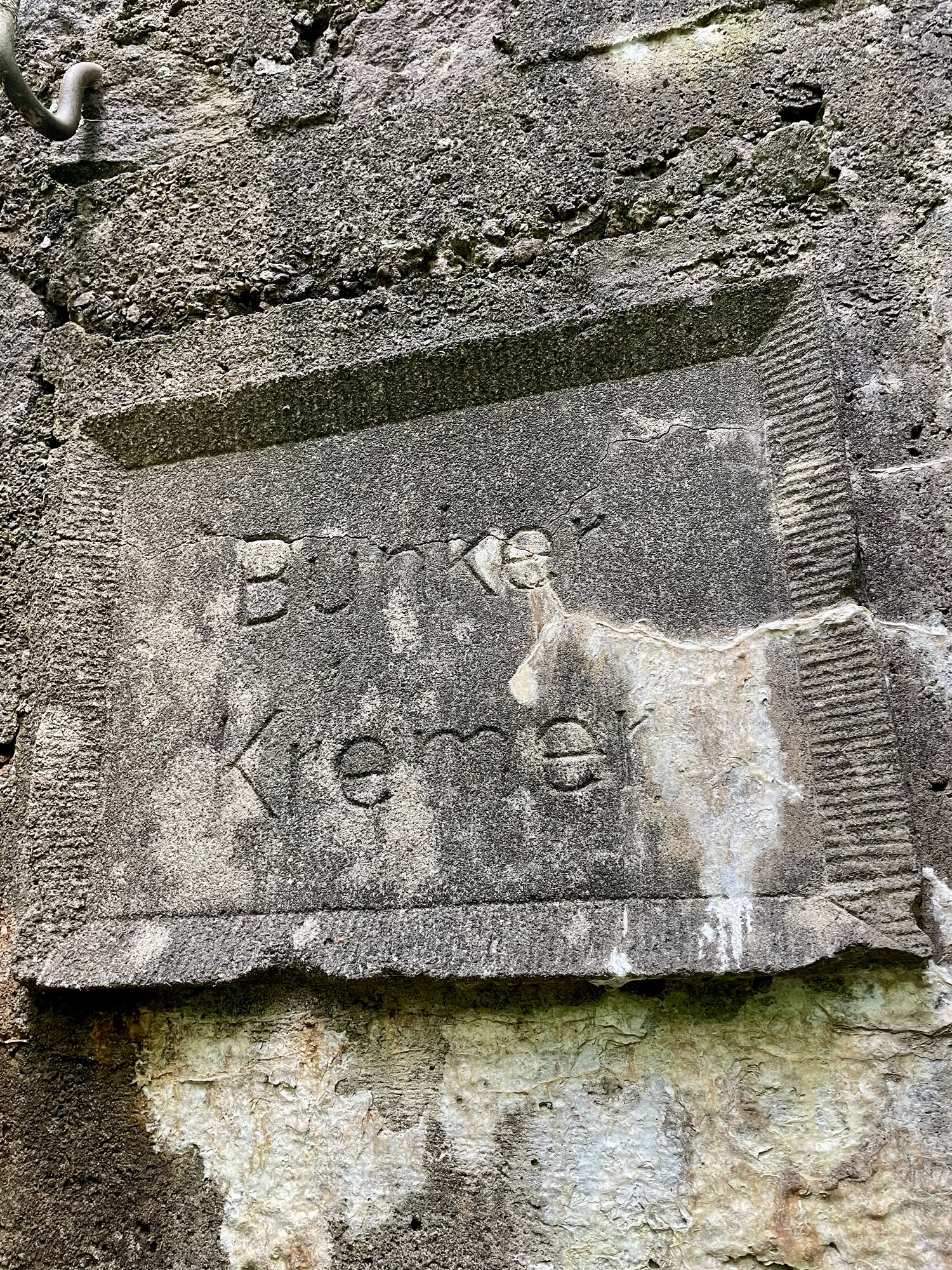


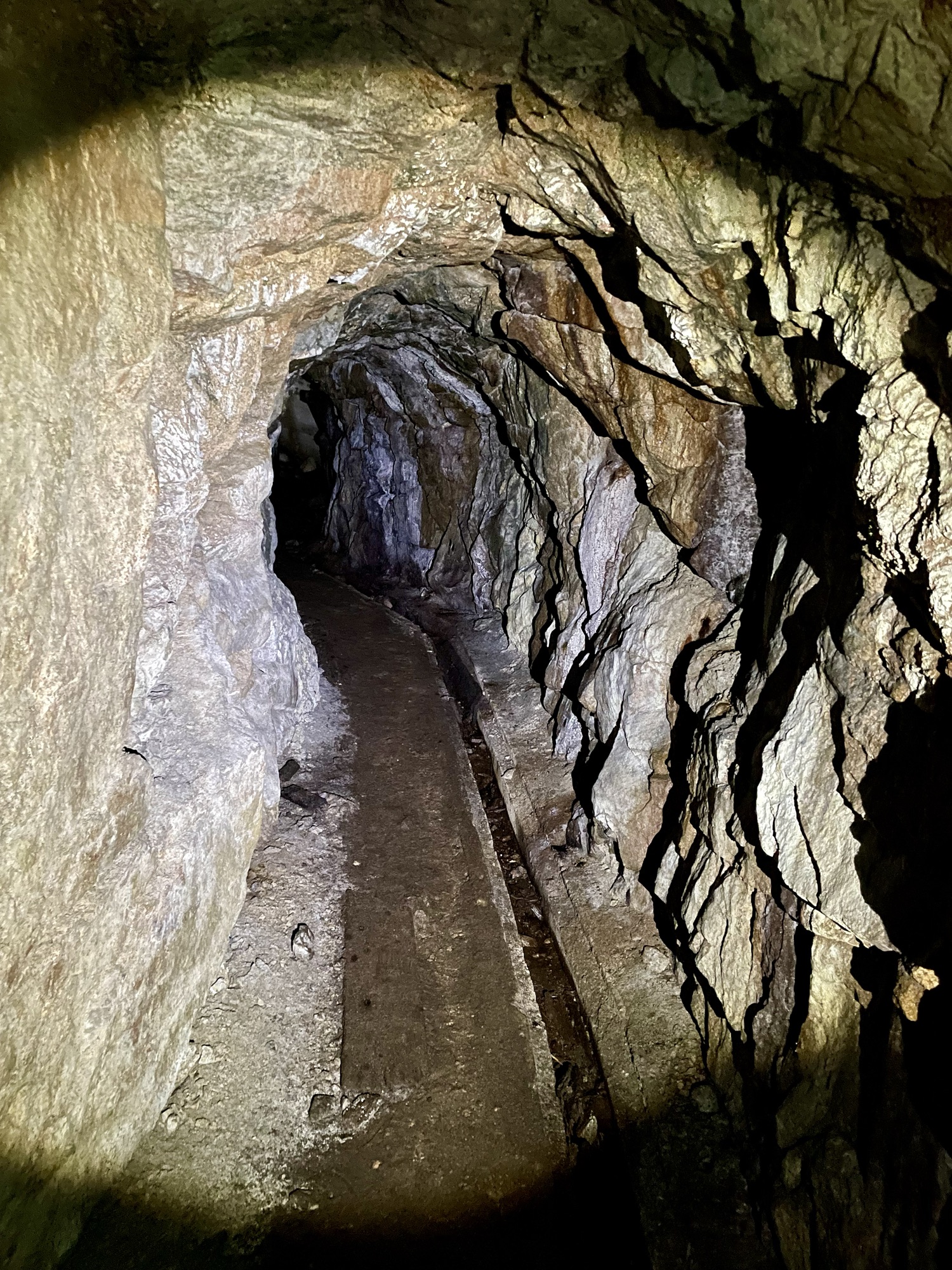
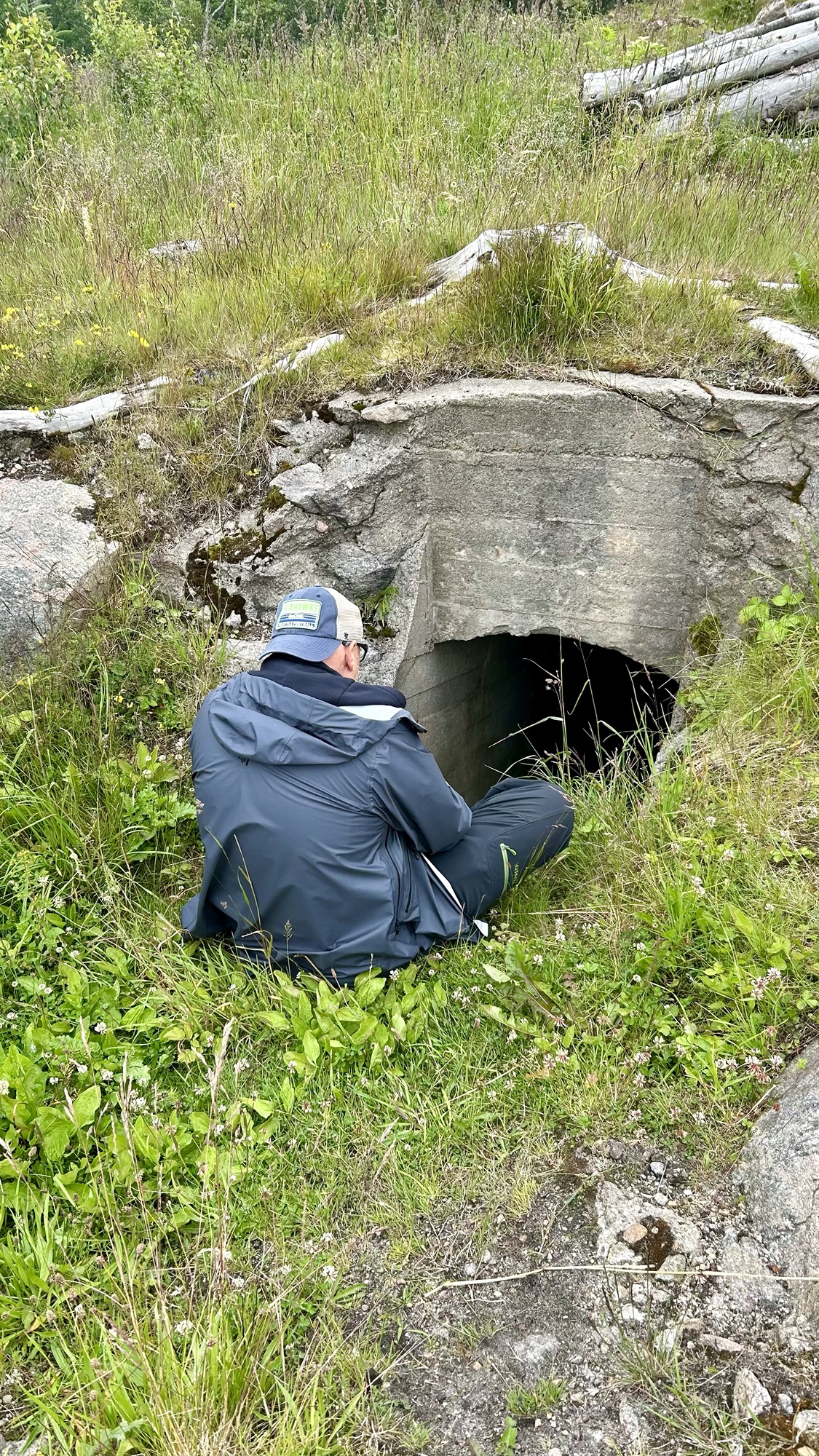
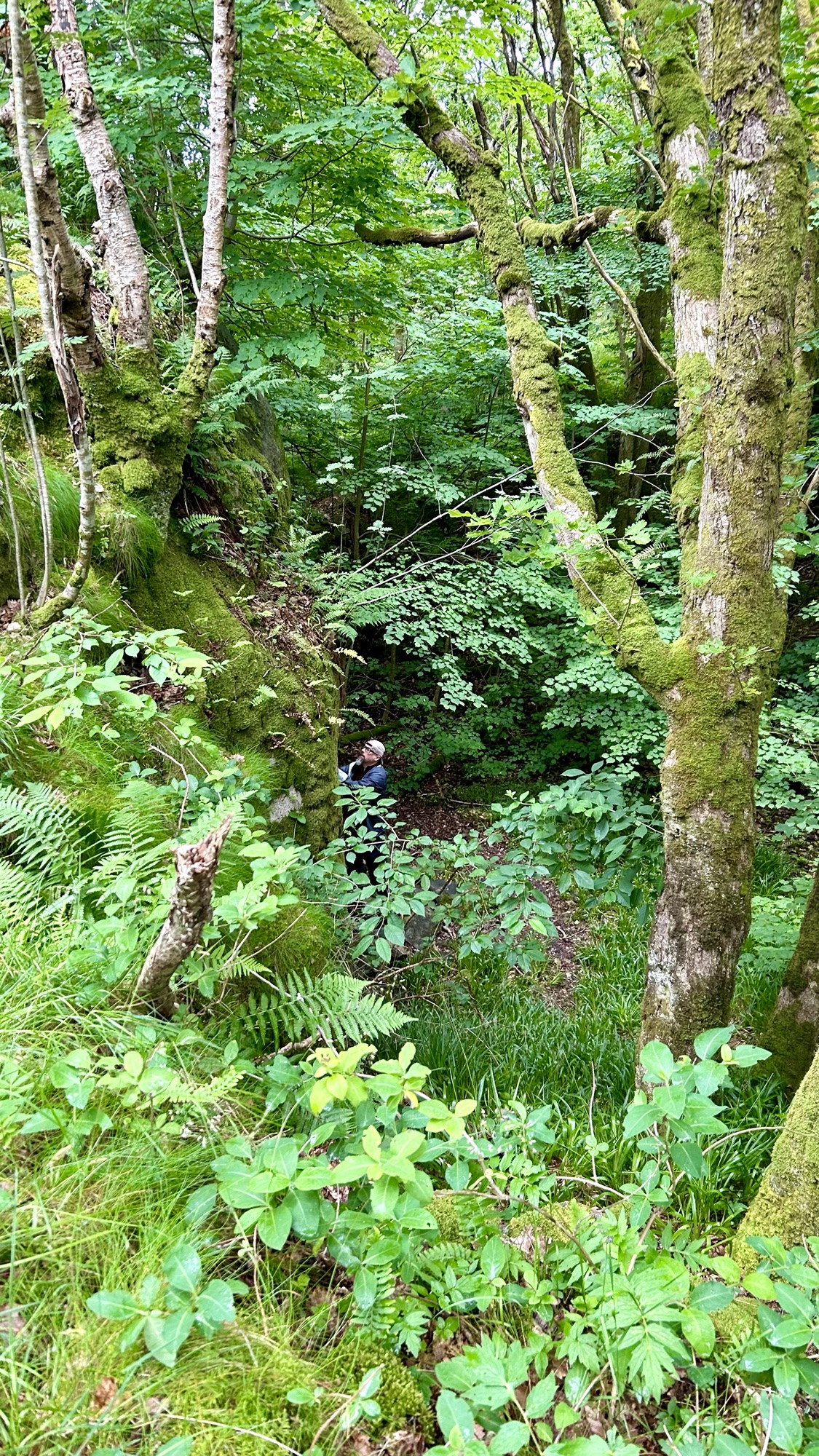

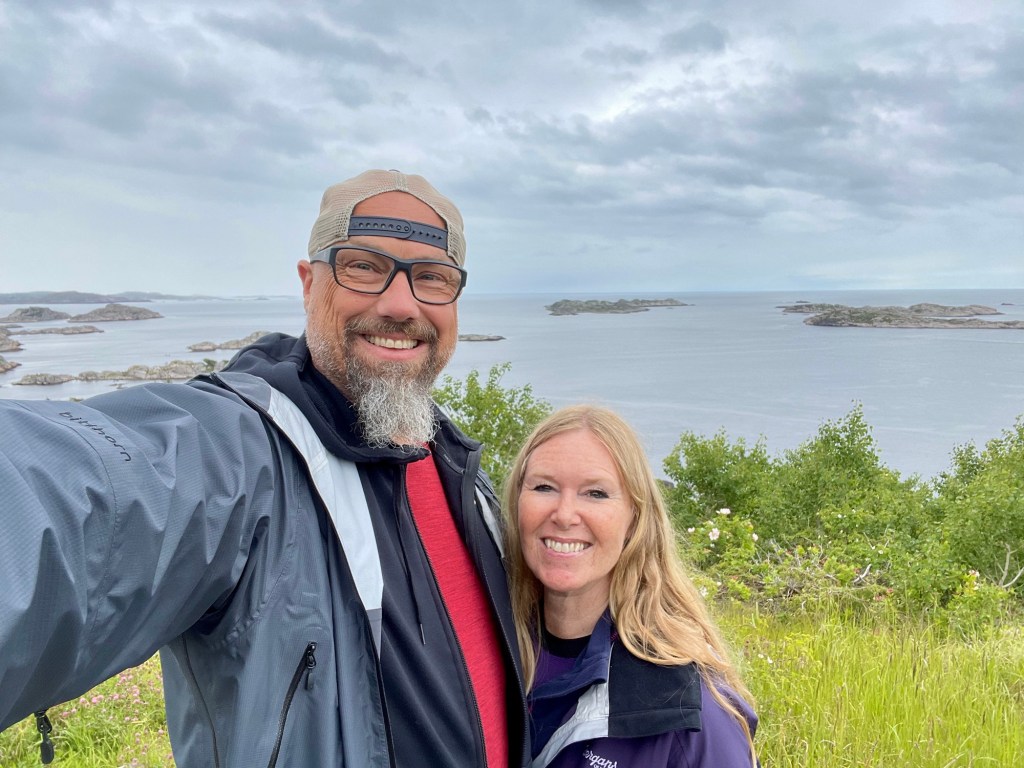
We had the area all to ourselves on a Saturday in June, it was awesome to walk among historical ruins in absolute solitude. The woods were magical, and the area is a little gem if you are ready for some climbing and scrambeling to get to the adventure.


Maybe we should write more about our home town?




 Wremer Travels (yes, we do!)
Flott reportasje fra Landehobde😃👍
LikeLiked by 2 people
Takk👍skulle ønske det fantes mer digitalt materiale rundt alle installasjoner i Mandal.
LikeLike
Wow that’s some cool history there!
LikeLiked by 2 people
Lots of it all around👍
LikeLiked by 1 person
You are heroic to choose to document the history right in your own backyard.
What amazes me about your photos is all the effort and sweat man extends to the art of making war. And then nature eventually reclaims dominion!
Thank you for posting.
LikeLiked by 1 person
I am no hero but thank you for your words and reflection.
LikeLiked by 1 person