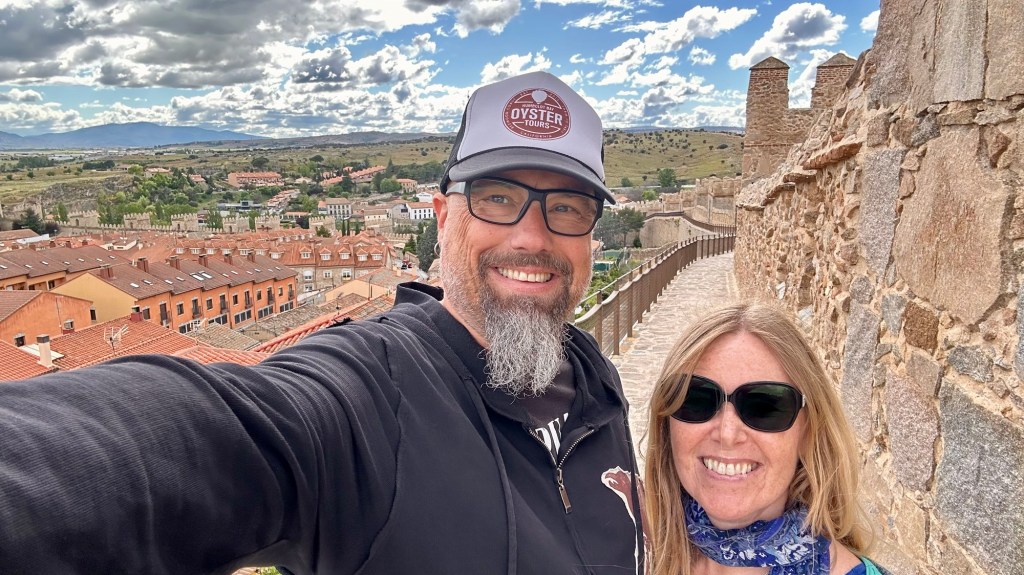
The Walls of Ávila, located in the town of Ávila in central Spain, about an hours drive north-west of Madrid, are among the most impressive and well-preserved medieval fortifications in Europe. Constructed primarily between the 11th and 14th centuries, the walls were built to protect the city from potential invaders, primarily during the time of the Reconquista when Christian kingdoms fought to reclaim land from the Moors.



The city itself within the walls is very cool and typical Spanish. We parked our car in the modern underground car park called Parking El Grande, just outside the Puerta del Alcazar. It gives immediate access to the town within the walls. It is also just a short walk from the entrance to the wall walk itself.
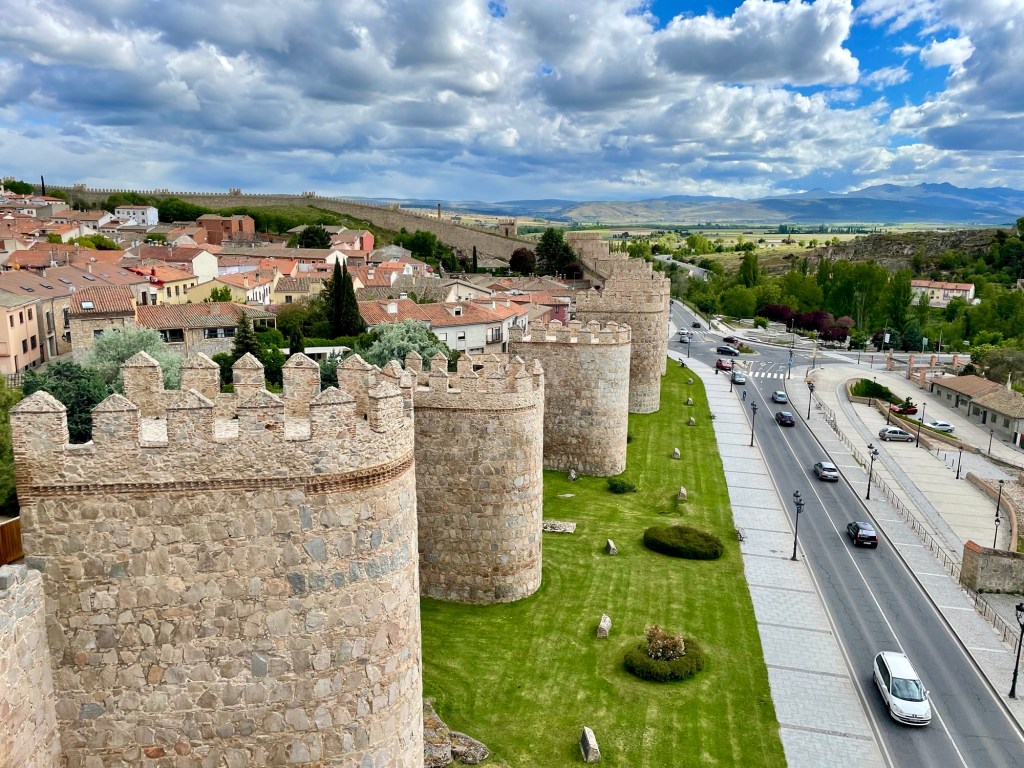
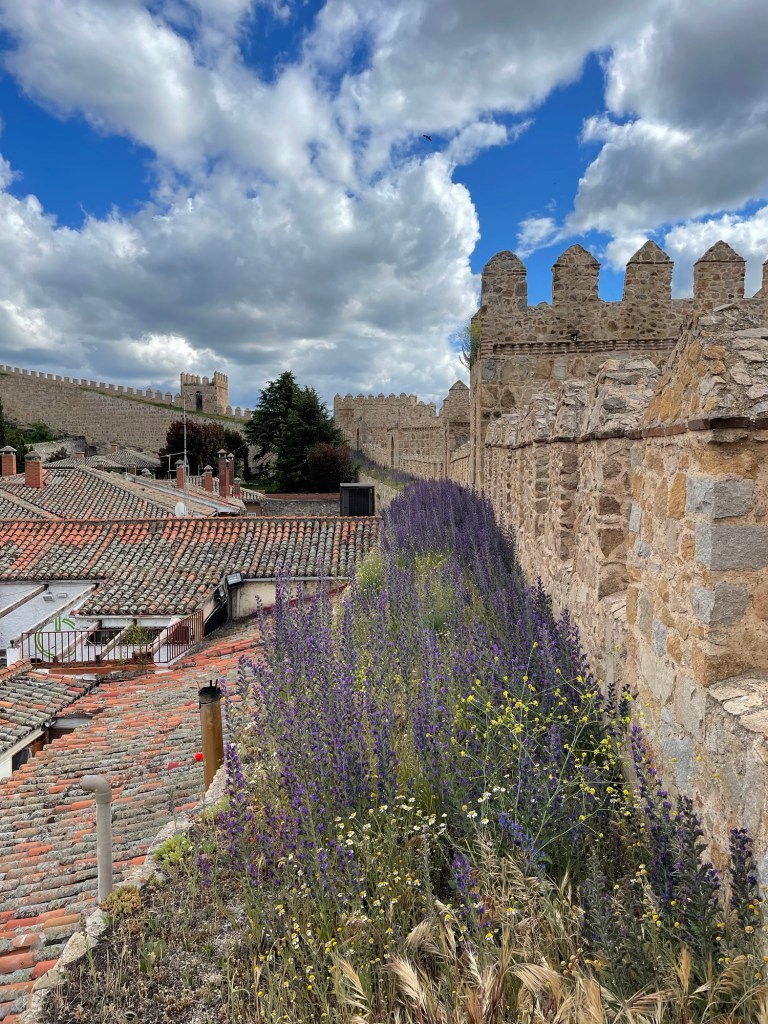
The walls stretch for approximately 2.5 kilometers (1.5 miles) and form a roughly rectangular perimeter around the old city. The structure features around 88 semicircular towers and 9 gates. The walls vary in height but are generally around 12 meters (40 feet) tall and 3 meters (10 feet) thick, making them an imposing defensive barrier. The design incorporates battlements and walkways, where soldiers could patrol and defend the city.
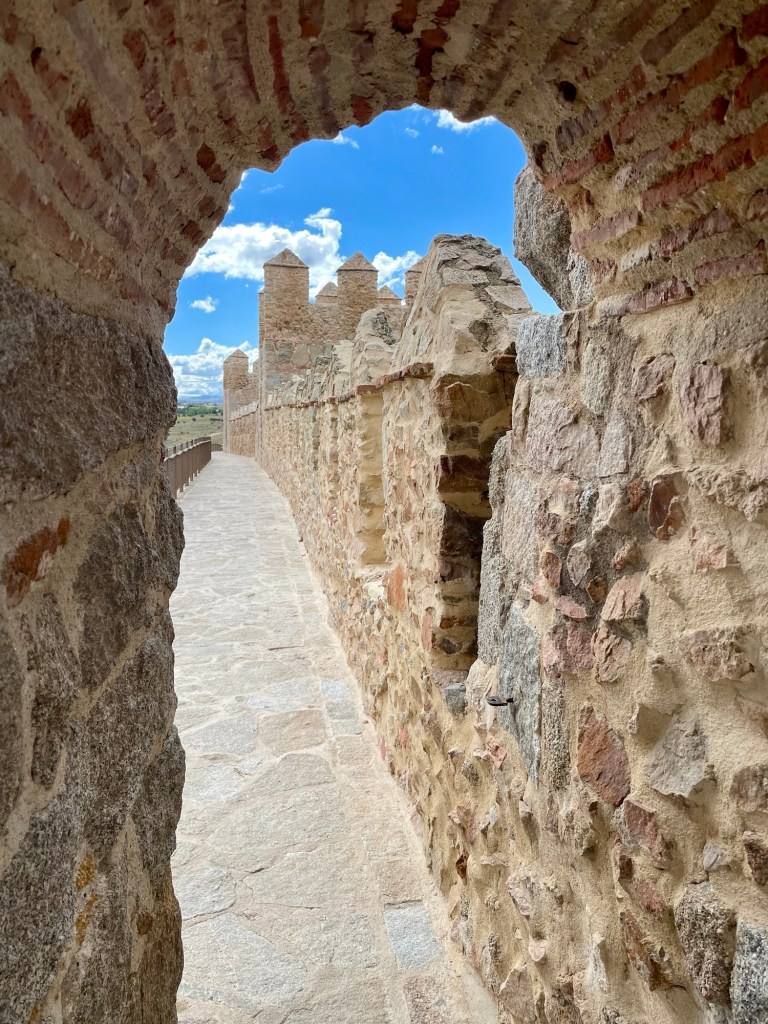
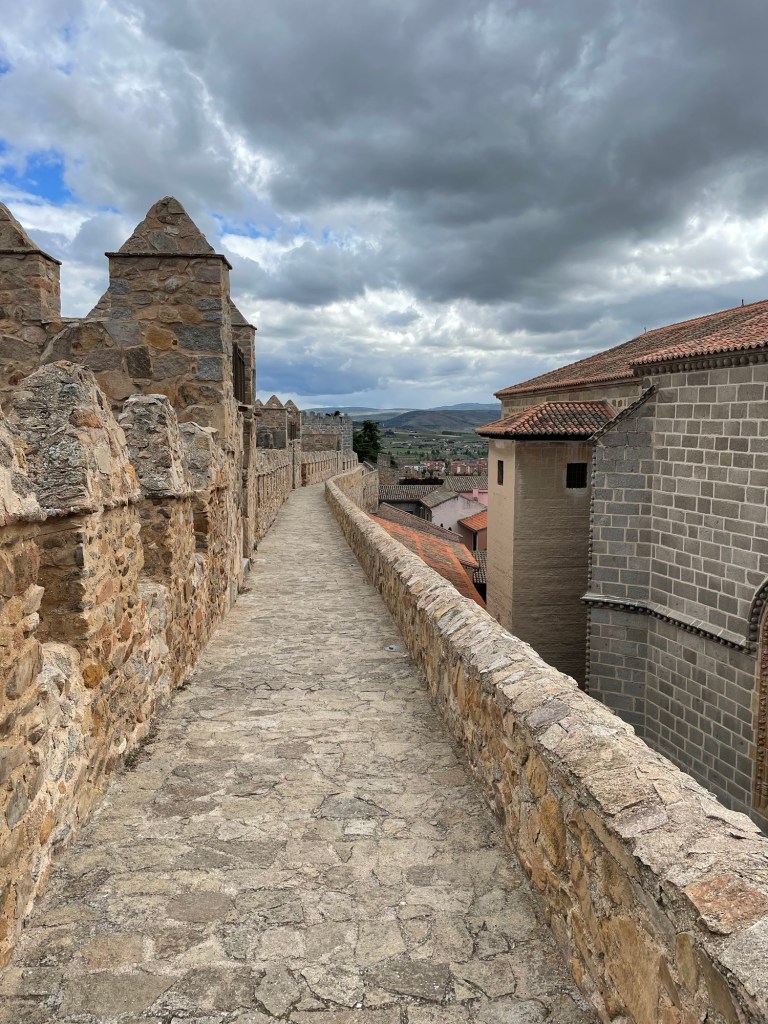


The walls are made primarily from granite, with some sections incorporating bricks and other materials. Their color shifts with the light, ranging from a golden hue in the daytime to a reddish tint at sunset.
The walls are punctuated by nine entrance gates, each with distinct architectural features. Some of the most notable are:
• Puerta del Alcázar and Puerta de San Vicente, the two largest and most grand gates, located on the east side of the city.
• Puerta del Carmen, a simpler, less fortified gate.
The Walls of Ávila are a symbol of the city and are classified as a UNESCO World Heritage Site. They represent not only military architecture but also Ávila’s role as a stronghold of the Christian Reconquista.
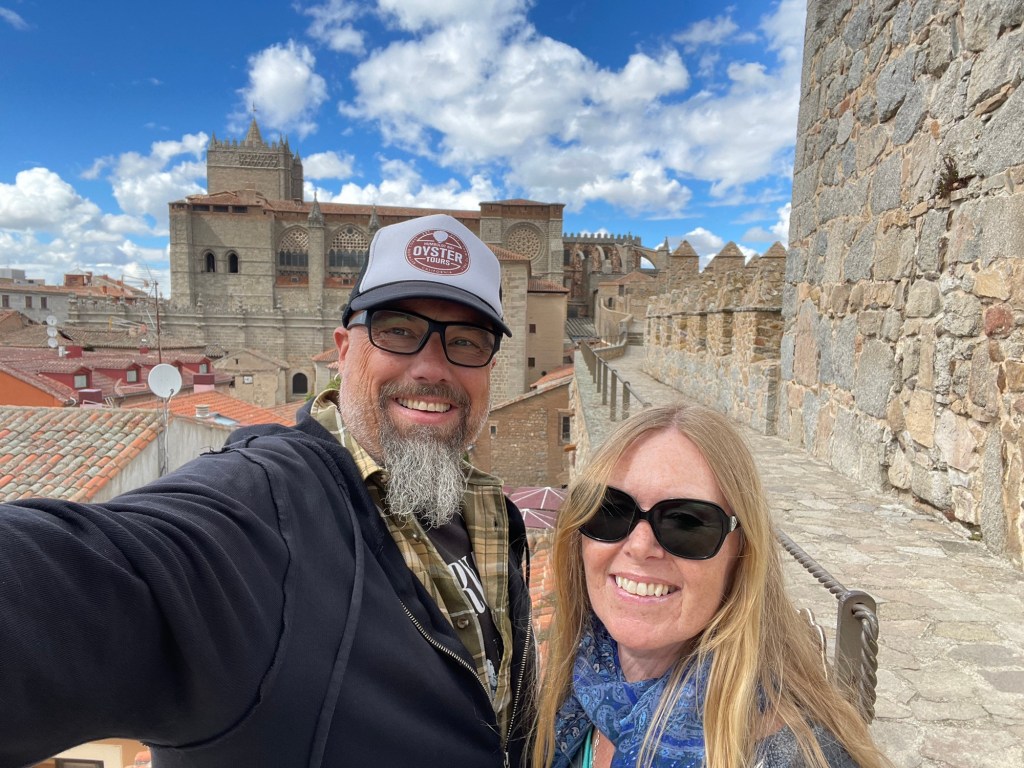
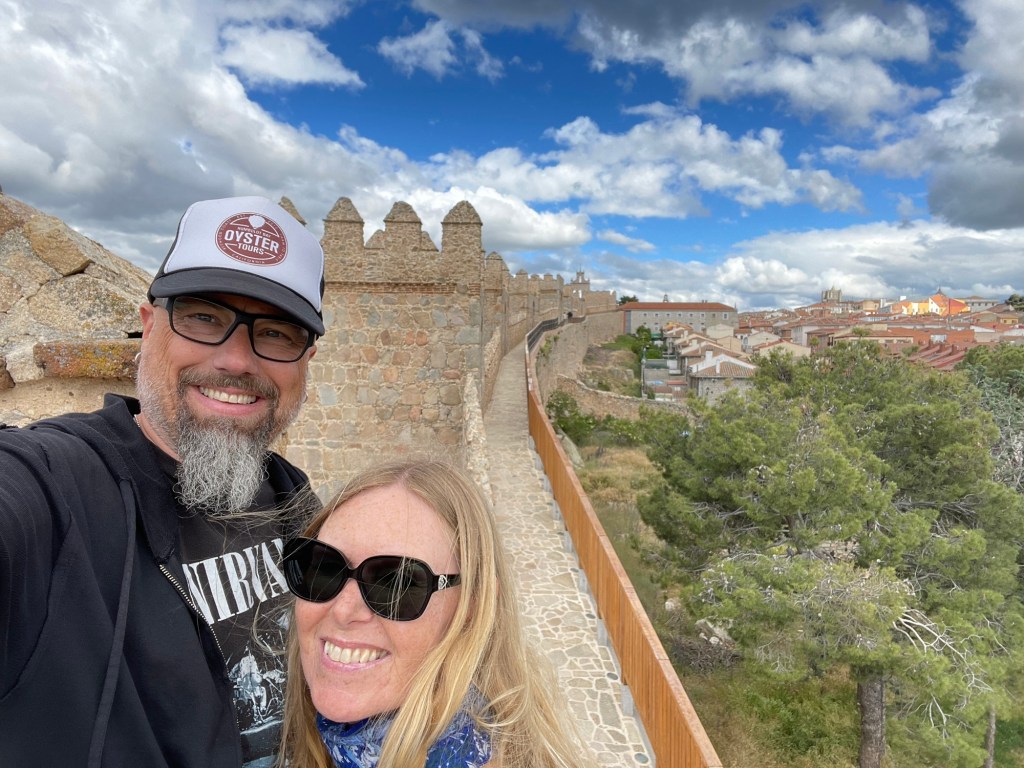
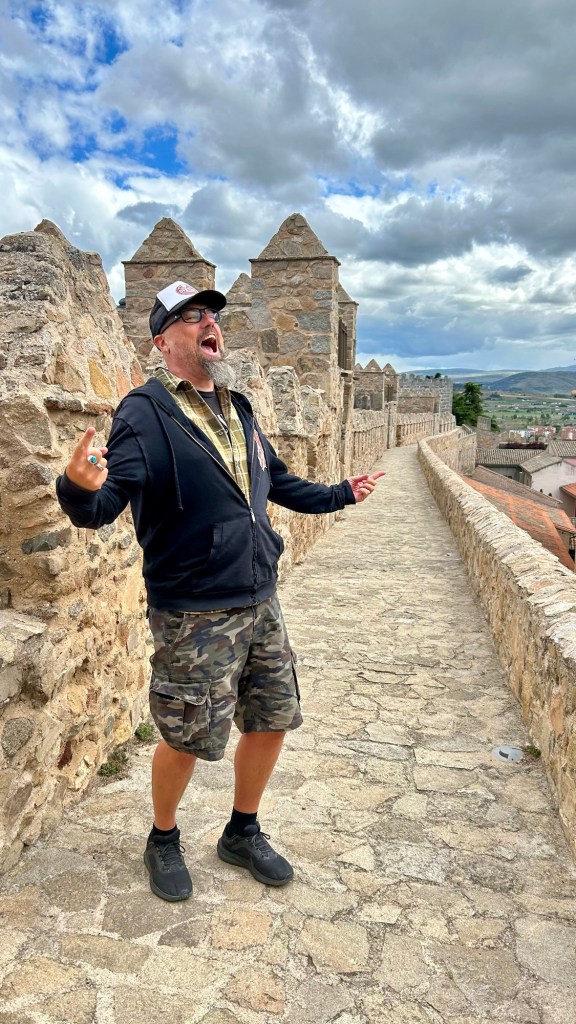


Today, visitors can walk along parts of the walls, offering panoramic views of both the city and the surrounding Castilian landscape. The walls also enclose several historical buildings, including the Cathedral of Ávila, which is integrated into the fortifications.

We would recommend to start at the main entrance, where you can buy tickets, at the back of the cathedral. This means a downhill walk to the lowest part of the wall, and where the walkway ends. There is also a ticket office here if you want to do it the opposite way.
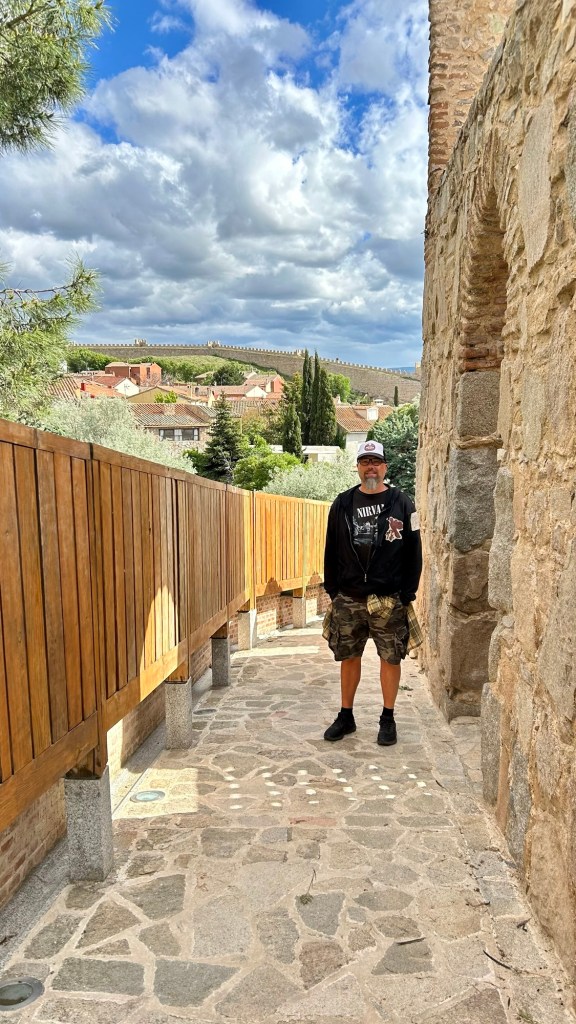
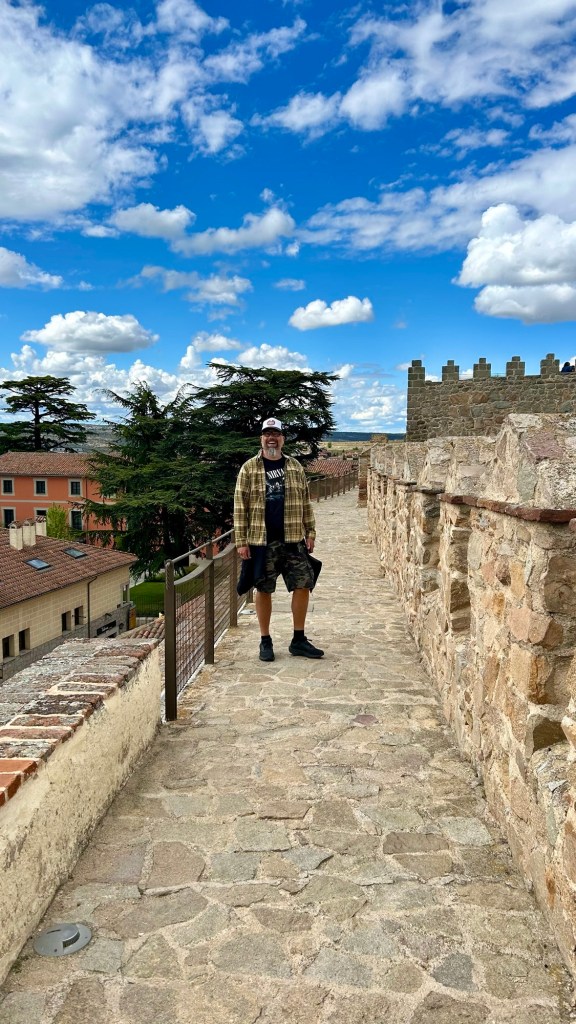
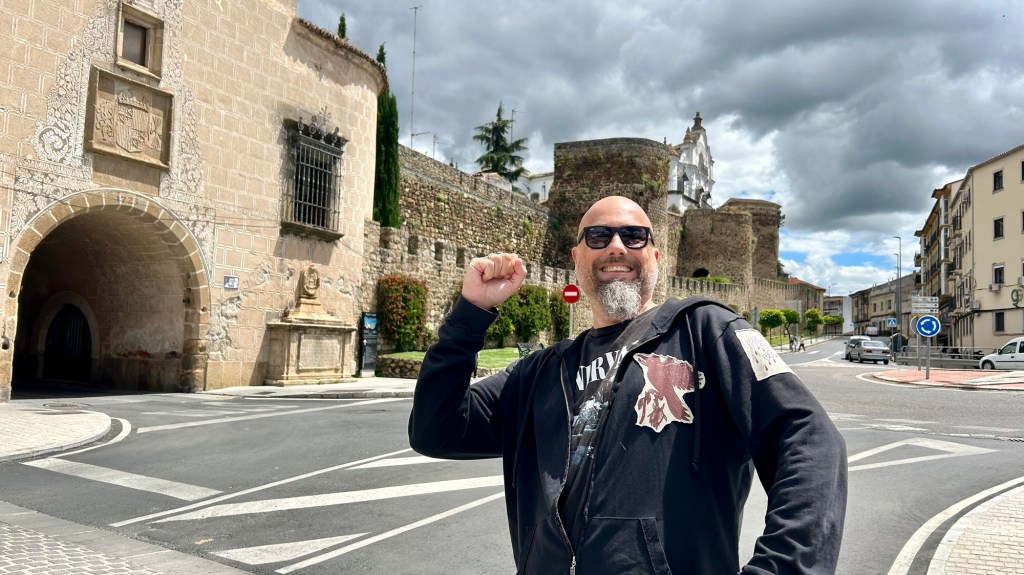
The Walls of Ávila are a testament to medieval military engineering and stand as one of Spain’s most iconic historical landmarks. It was one of our most awesome walks in a long time, and the word used most by Ørjan was: how awesome is this!!?? every 50 metres or so. A stop in Avila to walk the epic wall is a must on every road trip in central Spain.




 Wremer Travels (yes, we do!)
Quite impressive walls.
LikeLiked by 1 person
They were awesome👍
LikeLike