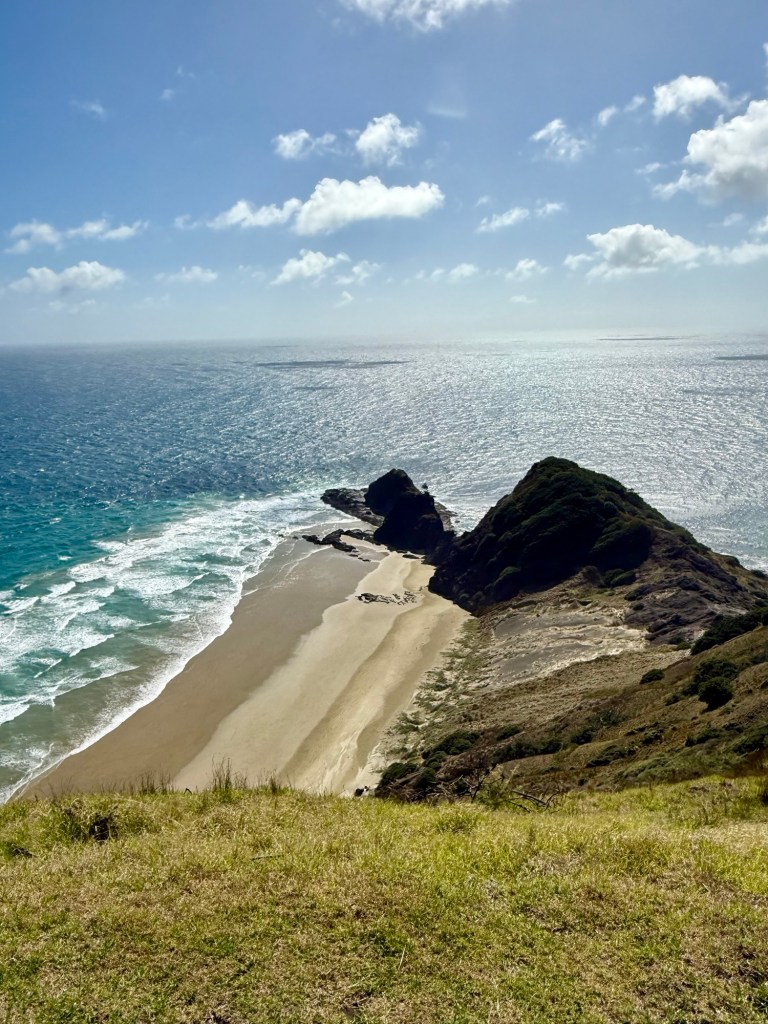
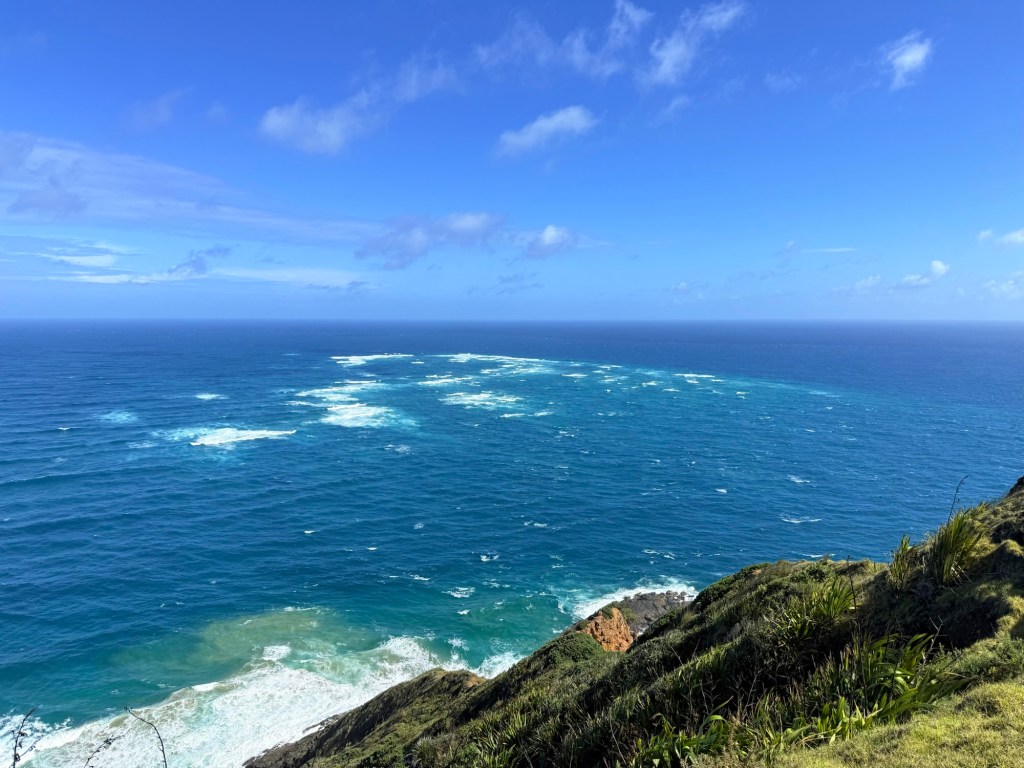
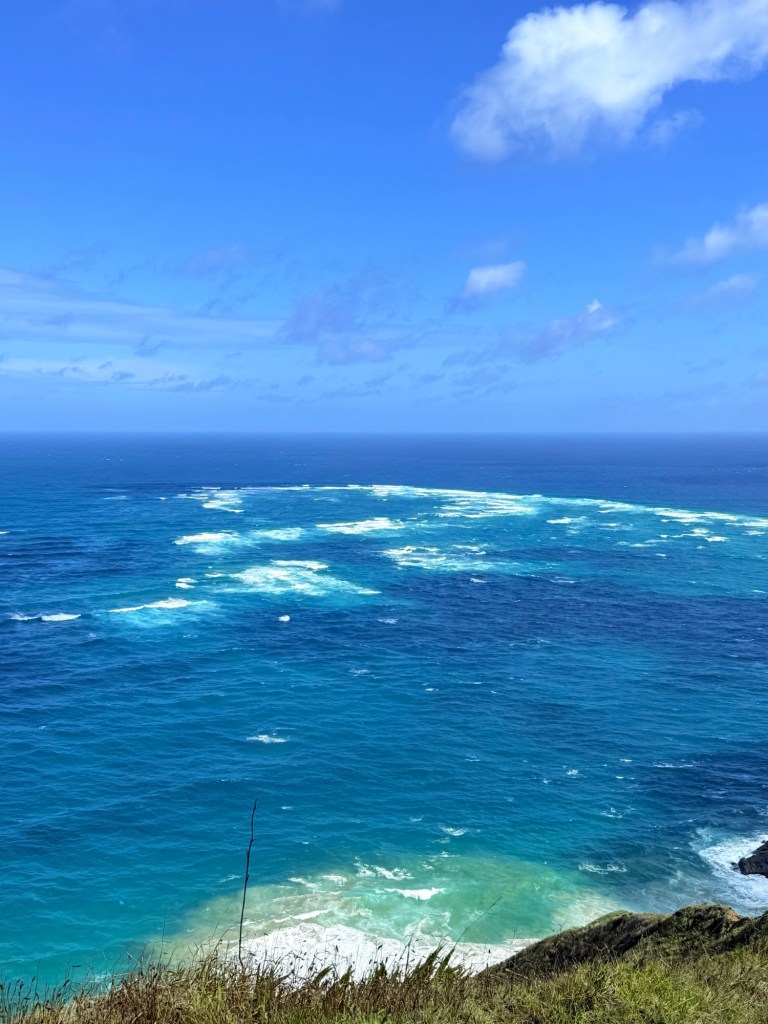
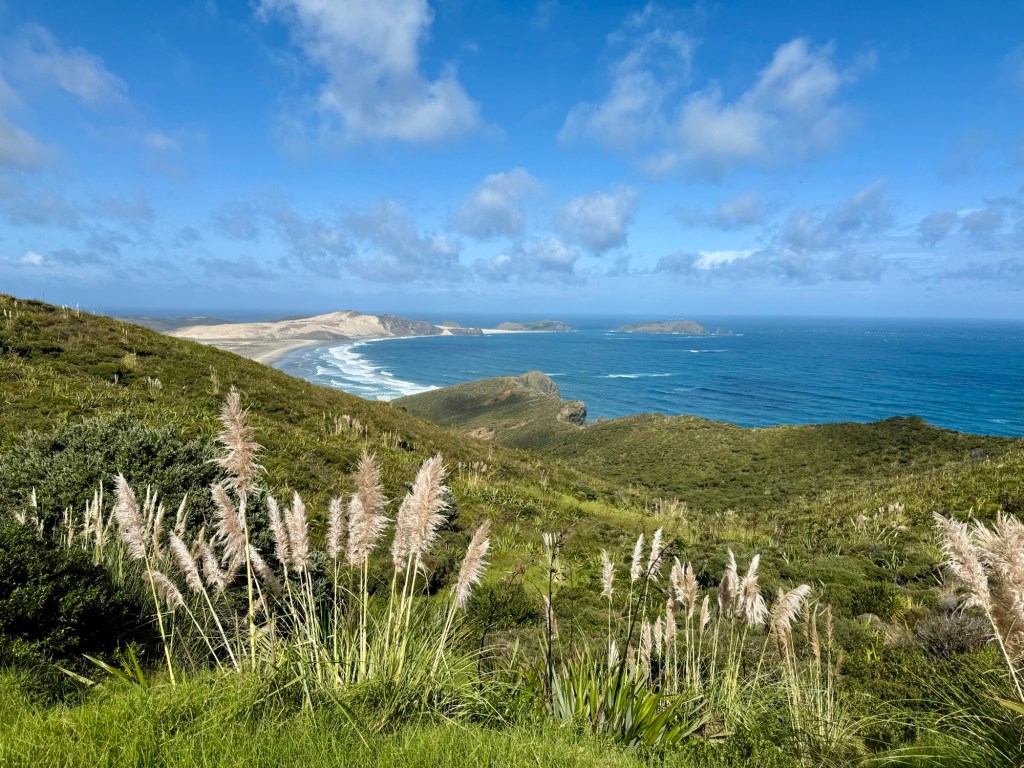
Cape Reinga marks the northernmost accessible point of New Zealand’s main islands. Here, the visible clash of currents between the Tasman Sea and the Pacific Ocean creates swirling waters that symbolize the meeting of powerful forces—often interpreted as a metaphor for life and death, or the physical and spiritual worlds.
A Place That Keeps Calling Us Back
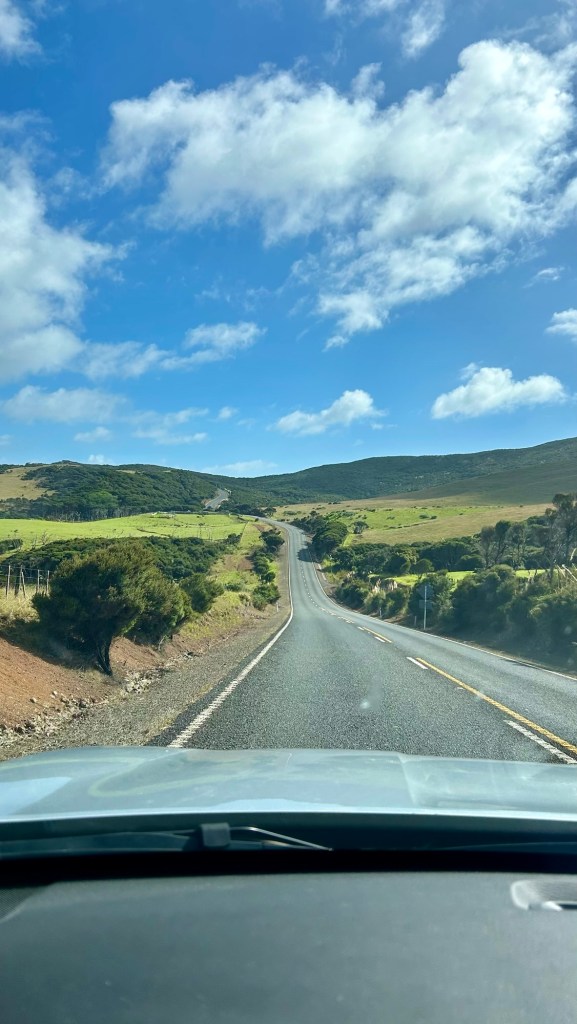
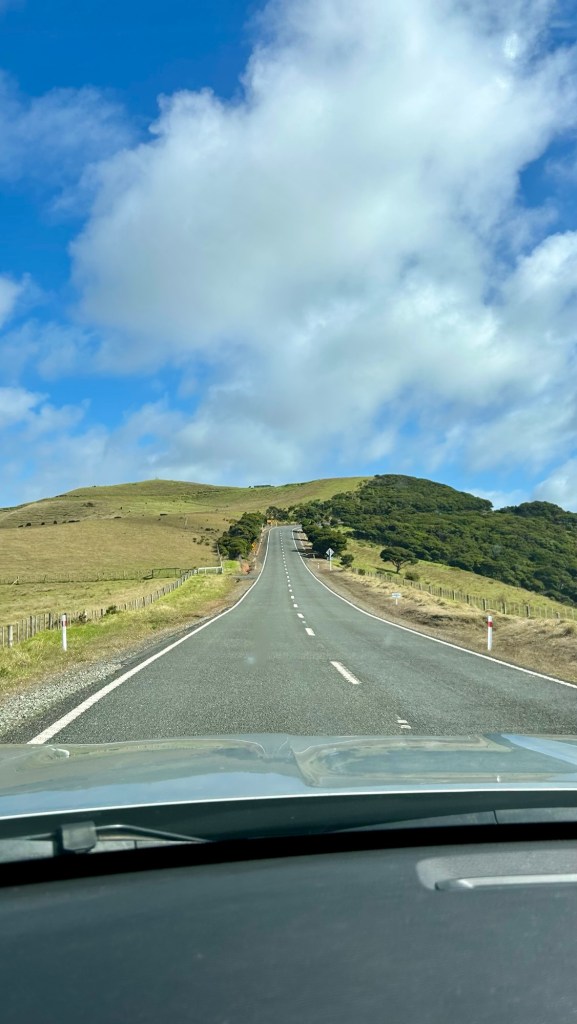
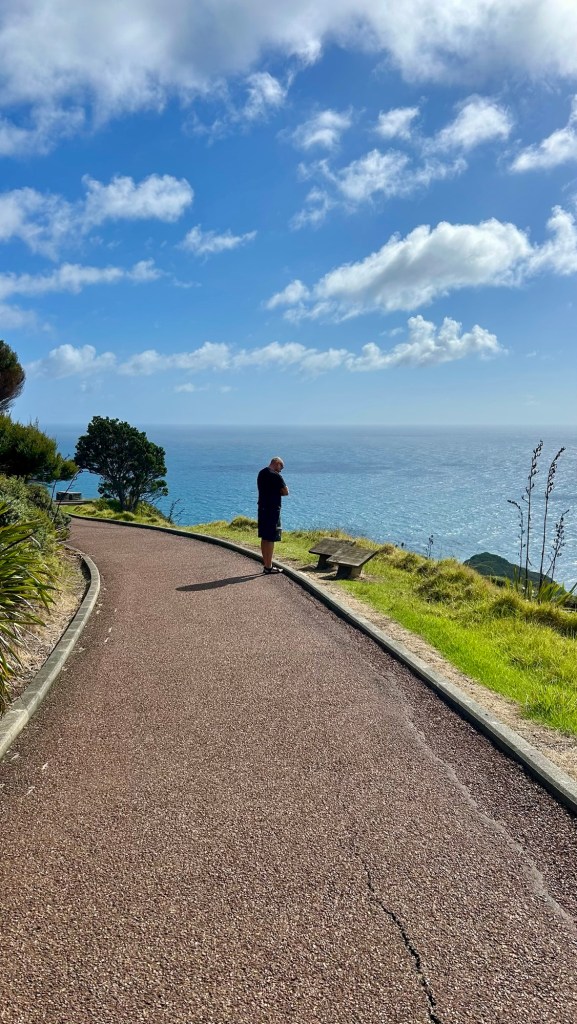
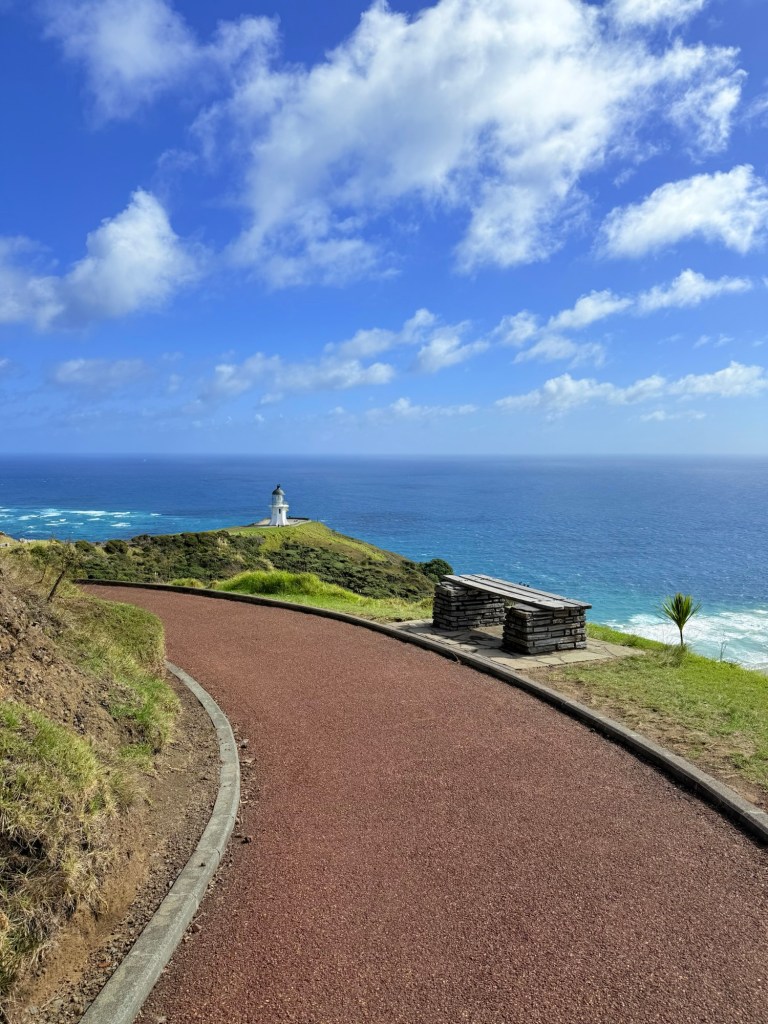
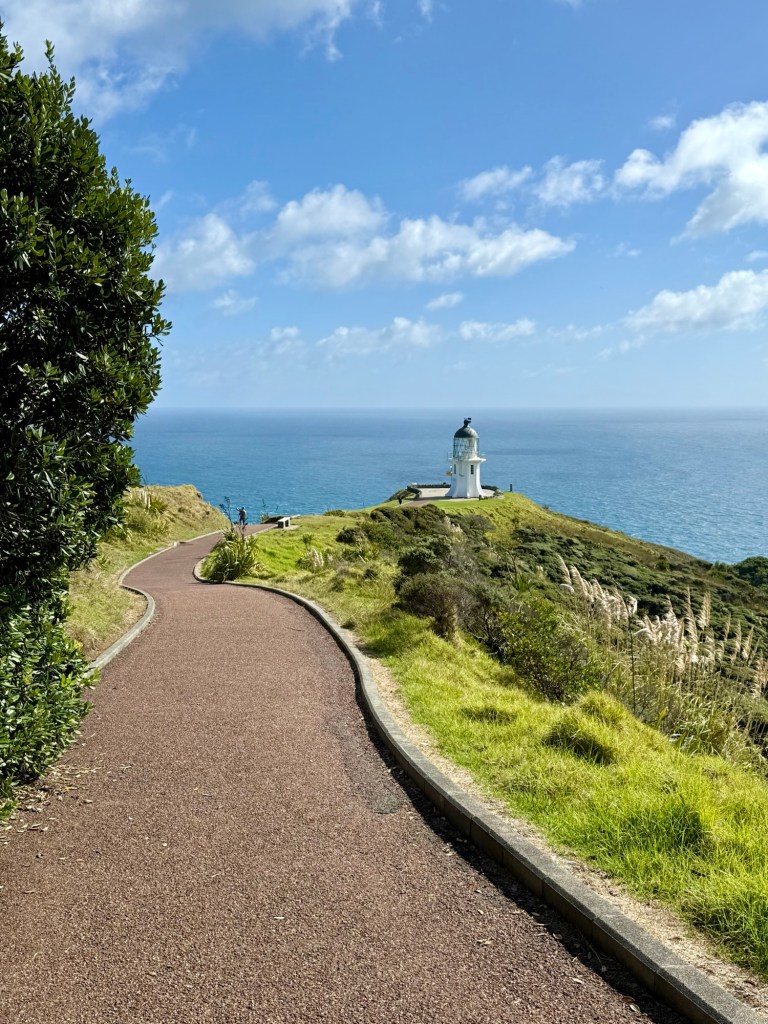
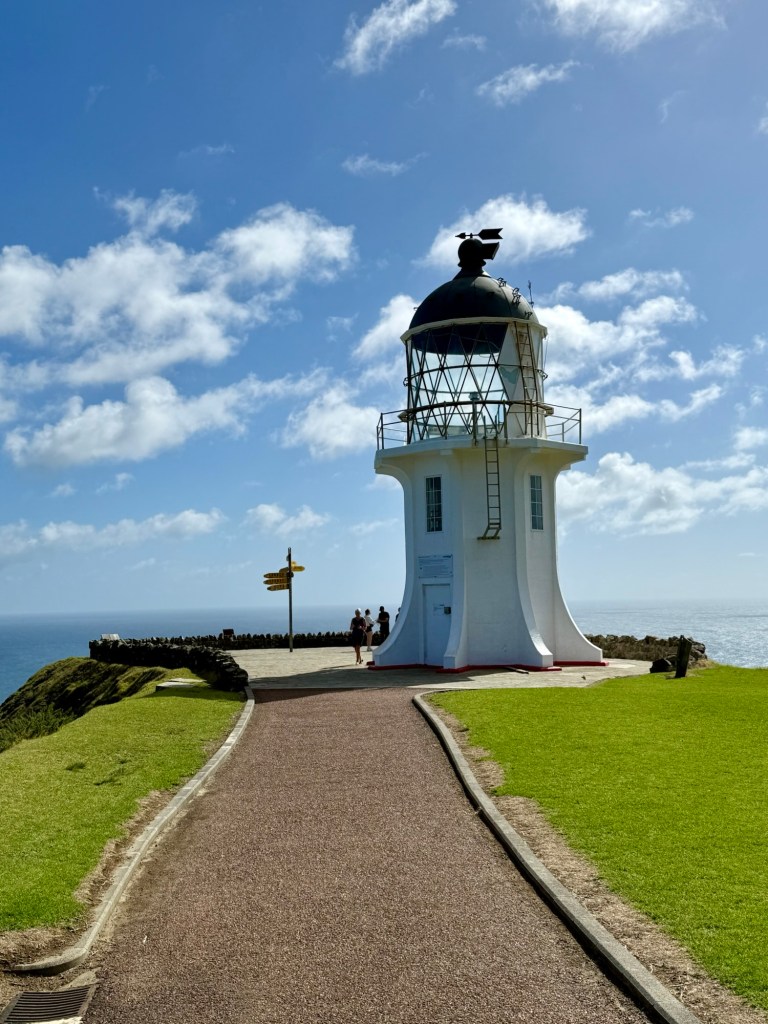
We have visited Cape Reinga on every trip to New Zealand. Over the years, it has transformed from a gravel road and a small parking area into a well-maintained destination, with a surfaced road, improved parking, and a beautifully designed walking path leading down to the lighthouse.
Walking Through Stories and History
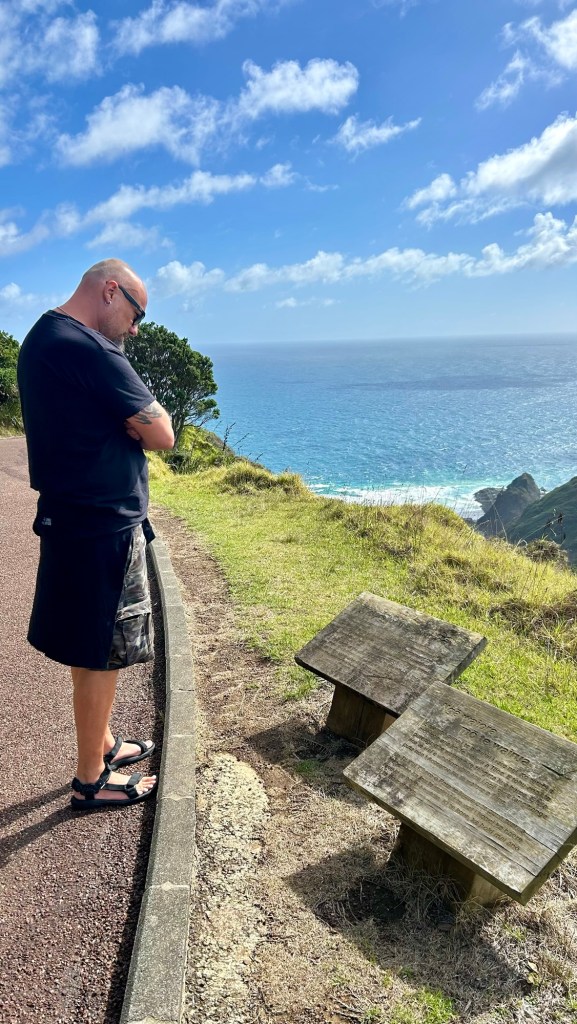
From the parking area and along the path, numerous plaques share information, facts, and the rich mythology surrounding this spectacular cape. These details add depth to the experience, turning a scenic walk into a journey through both history and legend.
Spiritual Significance (Māori Worldview)
For Māori, Cape Reinga is far more than a scenic landmark—it is a sacred place. According to tradition:
It is the departing place of spirits (wairua) after death. Spirits travel along the coastline to Cape Reinga and descend a sacred pōhutukawa tree, believed to be over 800 years old. From there, they leap into the ocean to return to their ancestral homeland, often associated with Hawaiki (the spiritual place of origin).
Because of this, the area is considered tapu (sacred), and visitors are expected to behave respectfully—for example, avoiding eating in certain areas.
A Journey Through Time
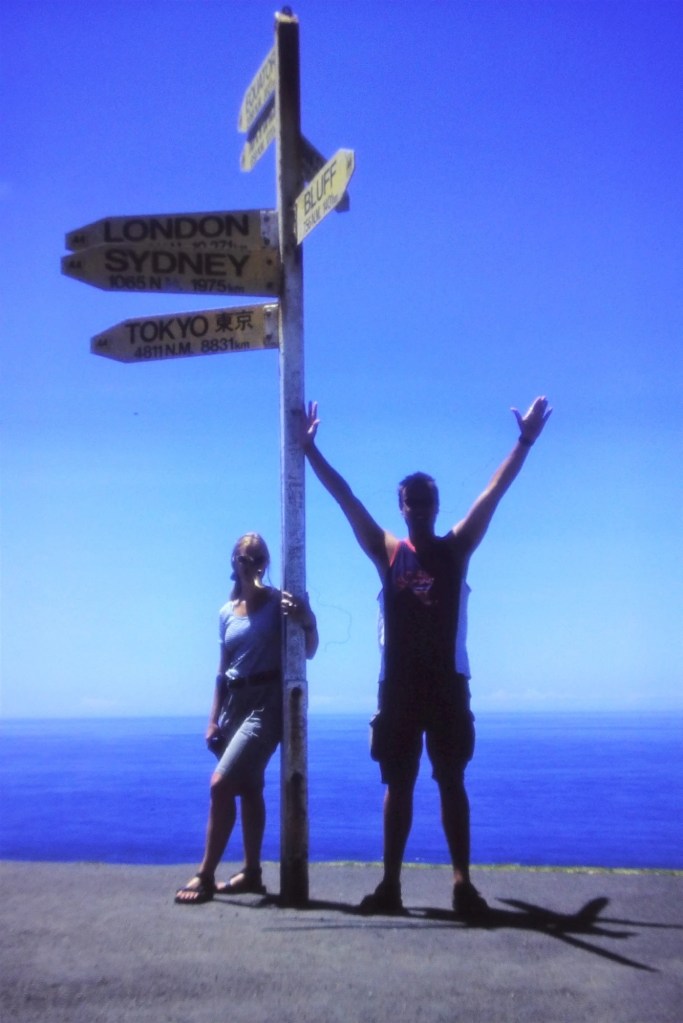
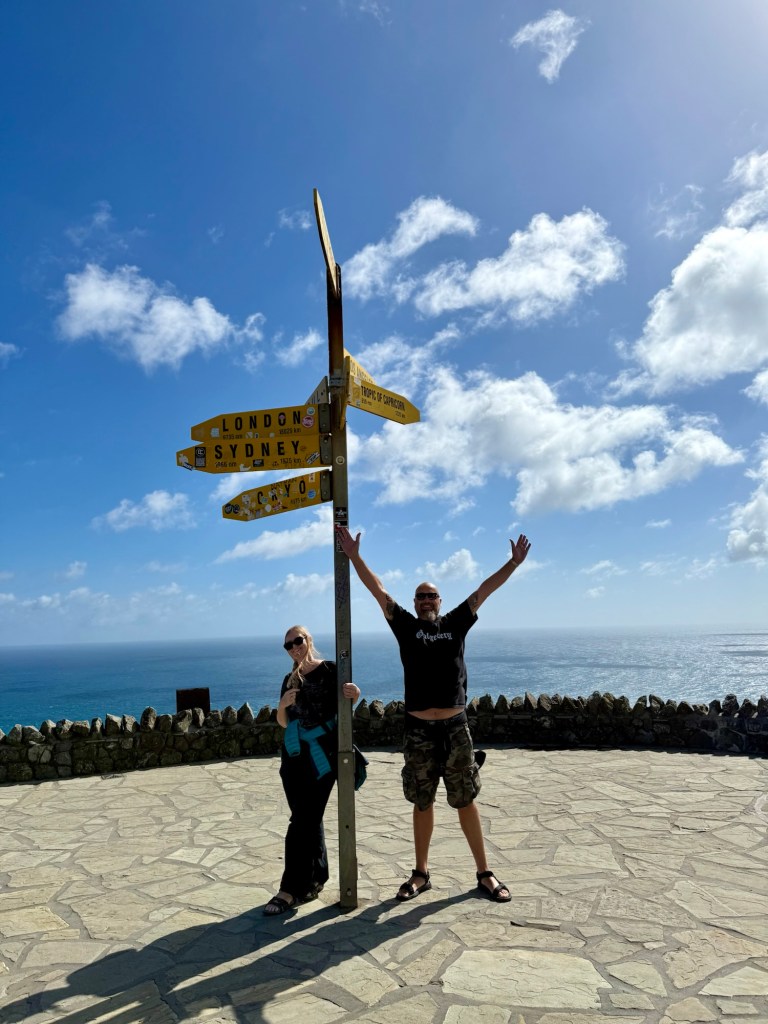
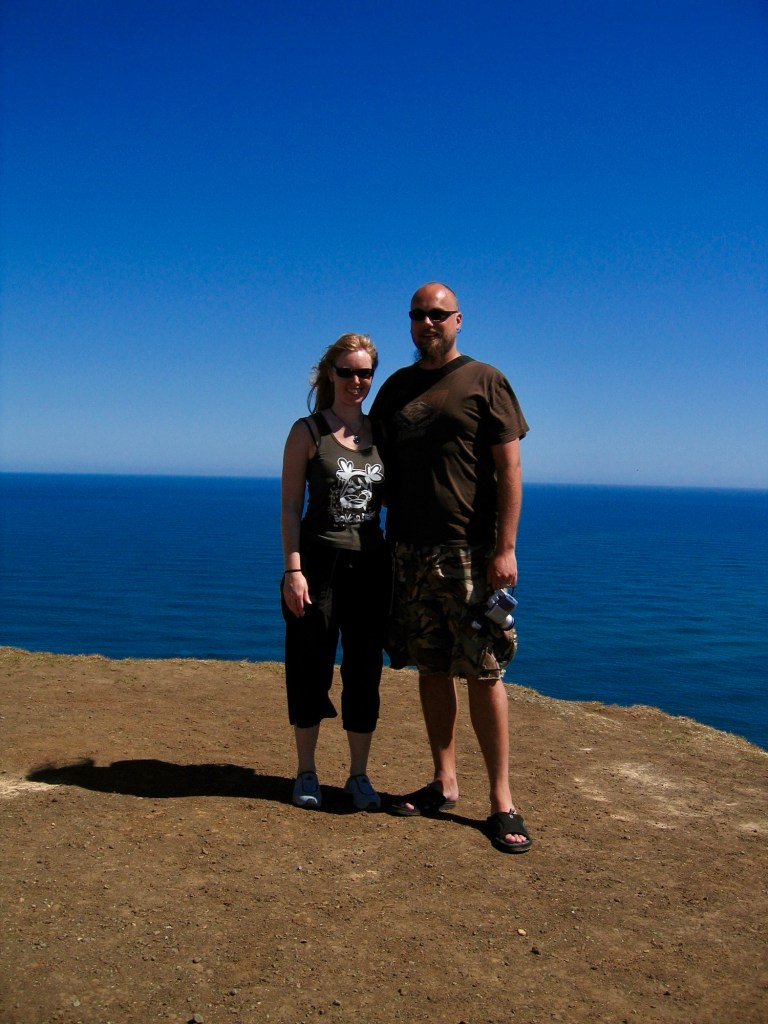
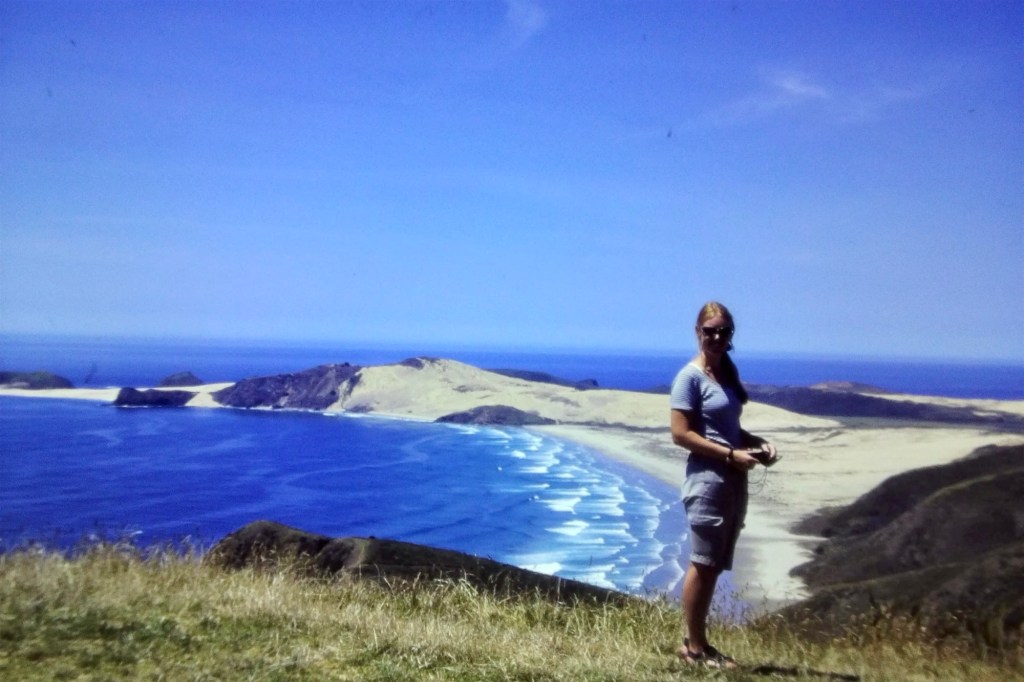
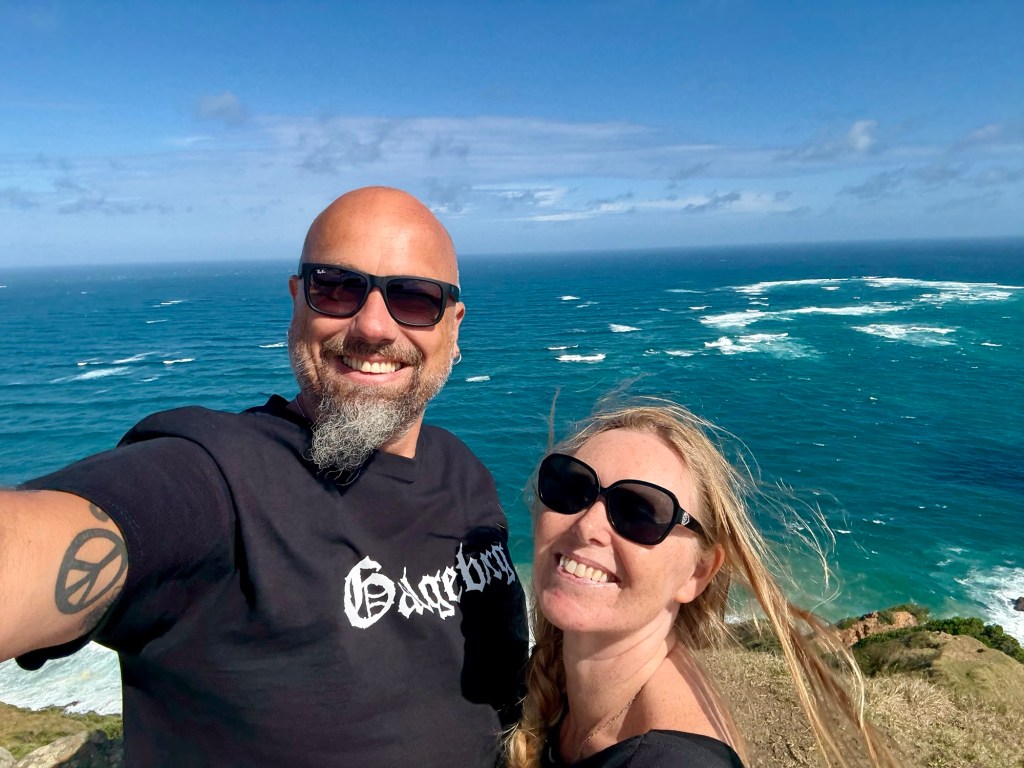
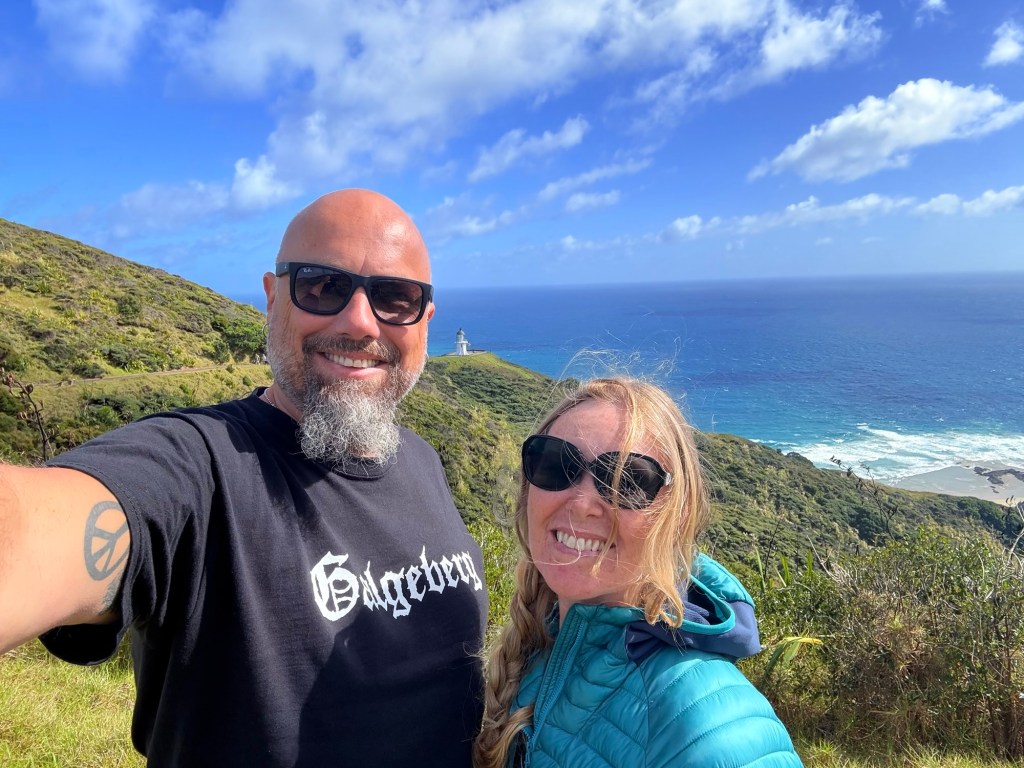
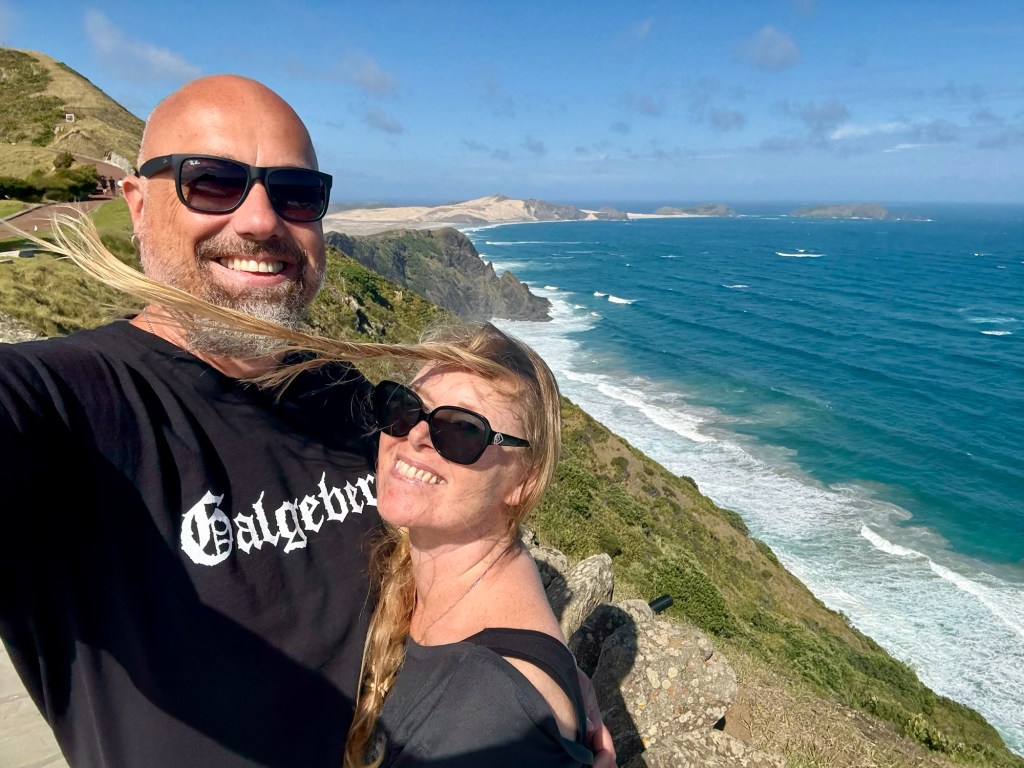
We walked the path while reminiscing about our first visit in 1997, when we were backpackers traveling by bus with fellow adventurers on Kiwi Experience. We returned again in 2005, and coming back in 2025 felt like a full-circle moment.
Timeless Beauty and Presence
The ocean remains just as spectacular as ever. The lighthouse—standing as a sentinel for sailors since 1941—continues to watch over the meeting of the seas. And the deep sense of spirituality, shaped over centuries, is still profoundly present at the cape.
Here’s the Māori story of the spirits’ journey from Cape Reinga—it’s one of the most powerful and poetic traditions in Polynesian culture.
⸻
🌌 The Journey of the Spirits (Te Ara Wairua)
In Māori belief, when a person dies, their spirit (wairua) begins a sacred journey called Te Ara Wairua—“the pathway of spirits.”
🛤️ The northward journey
• The spirit travels up the length of New Zealand, moving along ancient pathways.
• It passes significant landmarks and ancestral places, symbolically revisiting the land and people it belonged to.
• This journey reflects the deep Māori idea that identity is inseparable from land (whenua) and ancestry (whakapapa).
⸻
🌳 The sacred tree
At Cape Reinga, the spirit reaches a windswept cliff where a lone pōhutukawa tree clings to the rocks.
• This tree is believed to be over 800 years old.
• The spirit climbs down its roots, which stretch toward the ocean below.
• This moment represents the final connection between the physical world and the spiritual realm.
⸻
🌊 The leap into the afterlife
• From the roots, the spirit leaps into the sea where the Tasman Sea and Pacific Ocean collide.
• The waters are often turbulent here, symbolizing transition and transformation.
⸻
🏝️ Return to Hawaiki
After entering the ocean, the spirit journeys to Hawaiki, the ancestral homeland.
• Hawaiki is not just a physical place—it represents origin, belonging, and the spiritual source of life.
• In Māori thought, life is cyclical: people come from Hawaiki and return there after death.
⸻
🌿 Meaning behind the legend
This story reflects several key Māori beliefs:
• Life is a journey, not an end — death is a transition, not a disappearance.
• Connection to land is eternal — even in death, the spirit travels across familiar landscapes.
• Ancestry is central — the return to Hawaiki reinforces the importance of origins and lineage.
⸻
🌏 A global comparison
Cape Reinga’s role is similar to other “threshold” places between worlds:
• The River Styx in Greek mythology, where souls cross into the underworld
• The Valhalla of Norse belief, where warriors go after death
But what makes Cape Reinga unique is how deeply tied it is to a real, physical landscape that people can still visit today.




 Wremer Travels (yes, we do!)
2 comments ›